

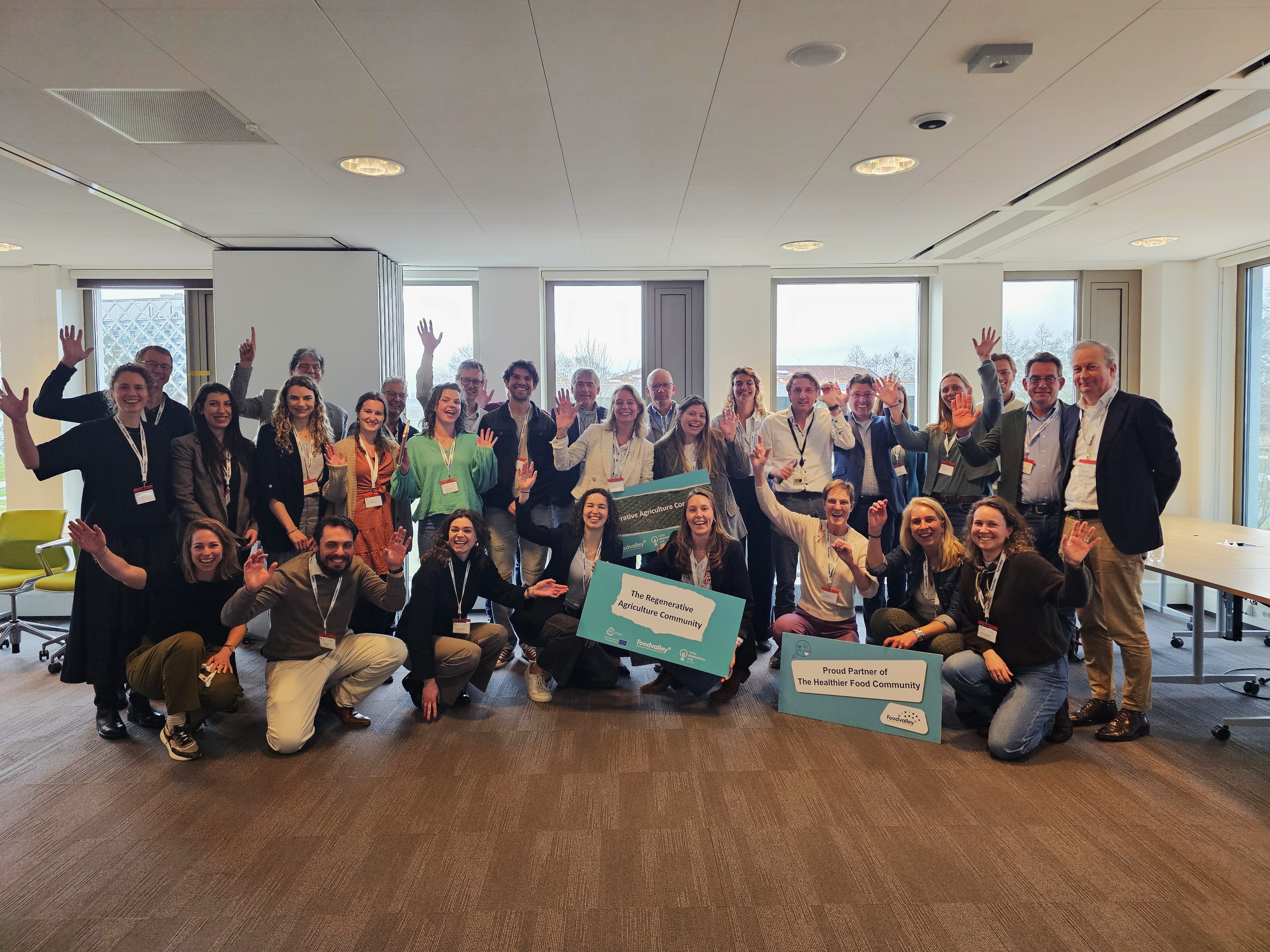
The Regenerative Agriculture Community
The Regenerative Agriculture Community
Regenerative agriculture is gaining momentum across Europe. Farmers are exploring new practices, companies are rethinking their sourcing, investors are looking for credible transition models, and knowledge partners are building evidence and support.
But momentum alone is not enough. To move from promising examples to real system change, people and organisations need to find one another. They need a trusted space to exchange knowledge, understand shared challenges and discover where collaboration can lead to action in all openness. That is the role of The Regenerative Agriculture Community.
Regenerating agriculture together
The Regenerative Agriculture Community brings together partners who aim to accelerate the transition towards a regenerative food system. It connects actors across landscapes and value chains, from farmers and producer organisations to processors, brands, retailers, investors, knowledge partners, governments and enabling organisations.
The community is an open space, hosted by Foodvalley, where its independent role is to inspire, connect and facilitate. We use our mapping and ecosystem knowledge, network and convening power to bring the right people to the table, set the agenda and create space for knowledge exchange, co-creation and the inception of coalitions for change via initiatives.
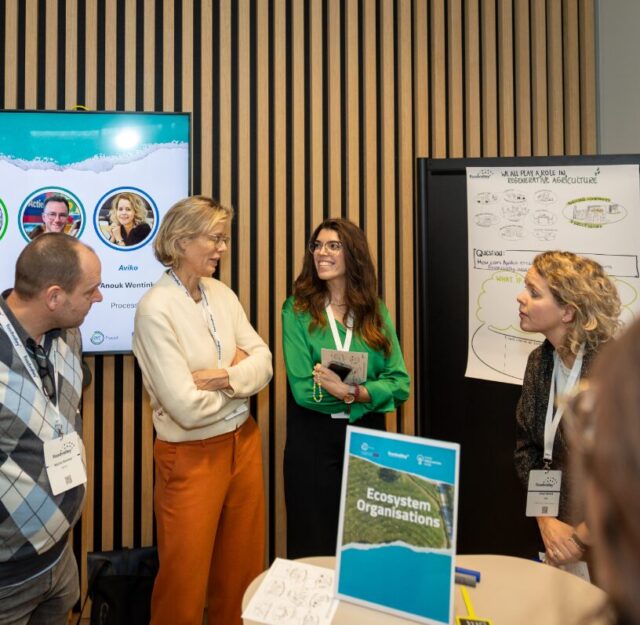
Case group discussion during our annual Partner Event
What partners say about The Regenerative Agriculture Community
‘As interest in regenerative agriculture grows, we aim to understand its definitions, policies, and best practices to effectively integrate it into our future product offerings. We see regenerative agriculture as a key strategy for long-term sustainability and want to explore how it can benefit our products and operations.’
Dr. Oetker
‘S&dB has developed a concept that needs to be further validated and embraced by relevant stakeholders in our supply chain. We believe that the Regenerative Agriculture Community gives us access to these relevant partners, with whom we can further develop and scale our concept, and we can share our experiences with to achieve also their goals.’
 Harmen Smid, CEO S&dB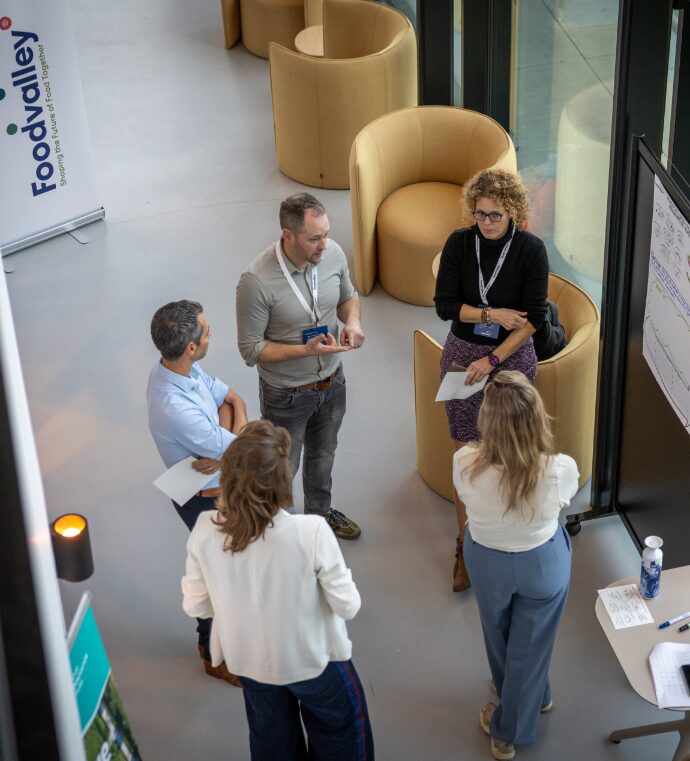
Case group discussion during our annual Partner Event
A breeding ground for collaboration
The community is a space where partners meet, learn and explore what is needed to make regeneration work in practice. It is where value chain partners can connect, where companies better understand farmers’ realities, where investors explore viable models and where new collaborations can begin.
Through the community, Foodvalley helps actors find one another through events, working groups and the Regenerative Agriculture Transition Map. We bring pioneers and proven examples into the spotlight, facilitate knowledge exchange and connect partners to expertise from across Europe.
The community is connected to innovative landscape and value chain initiatives, such as the Resilient Agriculture Portfolio and ReGeNL.
Through these connections, partners learn from lived experiences, connect on shared barriers and build the relationships needed to tackle these barriers together.
All conversations take place in accordance with relevant competition and antitrust laws.
Growing the future together
Regenerative agriculture is taking root fast. To go beyond pioneering and truly scale impact, the next step is collective action.
Through structured dialogue and collaboration, partners in The Regenerative Agriculture Community:
- learn from pioneers and initiatives that show how regenerative agriculture can move forward in practice
- explore how shared challenges and opportunities relate to their own work
- connect with actors they might not otherwise meet
- align around shared goals and identify opportunities for new collaborations
- explore what is needed to create long-term sourcing agreements, viable business models and fair rewards for farmers
When there are sufficient interest, momentum and commitment, conversations in the community can grow into concrete initiatives. These may be landscape collaborations, value chain initiatives or new partnerships that address specific barriers.
Welcome to our newest partners




Join the regeneration movement
As a partner of The Regenerative Agriculture Community you become part of a trusted ecosystem of actors working to make regenerative agriculture scale.
By joining forces, we share insights, test solutions, and build the business models that make regeneration both practical and profitable.
Together, we turn ambition into action: from healthy soils to futureproof supply chains.
You gain visibility across landscapes and value chains, meet relevant partners and most importantly, you become part of a community that moves beyond talking.
When shared ambition turns into commitment, partners can shape and join collaborative initiatives linked to existing programmes such as the Resilient Agriculture Portfolio, ReGeNL, Plant Protein Forward, or develop new initiatives together.
Fill in the form and we will invite you for a personal or joint e-meeting to explore collaboration. Learn more about partnership benefits
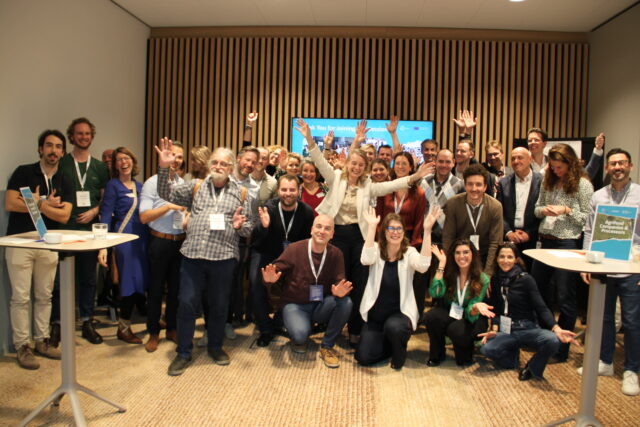
The community as a vibrant collective taking steps for a regenerative future
Meet the New Partners
Curious to see what a community session can look like? Check out the video below!
News & Events
Inside the landscapes: accelerating regenerative agriculture transition in practice

From soil to health: making regenerative & healthy food the default
Update on the Transition of the Regenerative Innovation Portfolio to the EIT Food Resilient Agriculture Portfolio

What Consumers Really Think About Regenerative Agriculture (And Why It’s Not What You Expect)

Foodvalley Partner Event 2025 – recap

RegenAg’s Dare to Ask: What Happens When the Whole Value Chain Speaks Up?

11 December 2025 – The RegenAg Community Breakout Session, part of Foodvalley Partner Event

Foodvalley Supports Launch of Landmark Regenerative Agriculture Landscape in Poland: Lower Silesia 360°

RVO Thematic Day on Regenerative Agriculture

Co-create the scaling of protein & regenerative foods
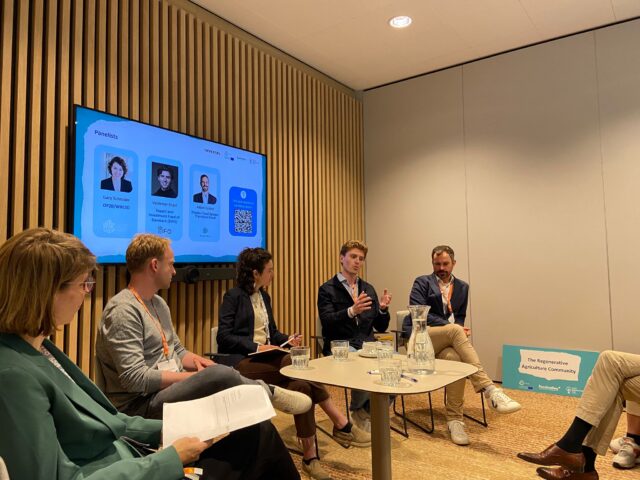
Financing Regenerative Agriculture at Scale: Key Takeaways from the F&A NEXT Panel Discussion

First Innovation Dialogue Series: Innovative Finance Models Pave the Way for Regenerative Agriculture at Scale
Meet the team



Initiatives
Thriving Together Programme
Relevant for
Regenerative Agriculture
Regenerative Agriculture can only scale when people, planet and profit thrive together. Regeneration of the land starts with the restoration of natural systems – soils plant & animal health, biodiversity and water systems -, But for farmers to regenerate the land at scale, regeneration of the food system is needed.
Read moreContact person

Resilient Agriculture Portfolio
Relevant for
Regenerative Agriculture
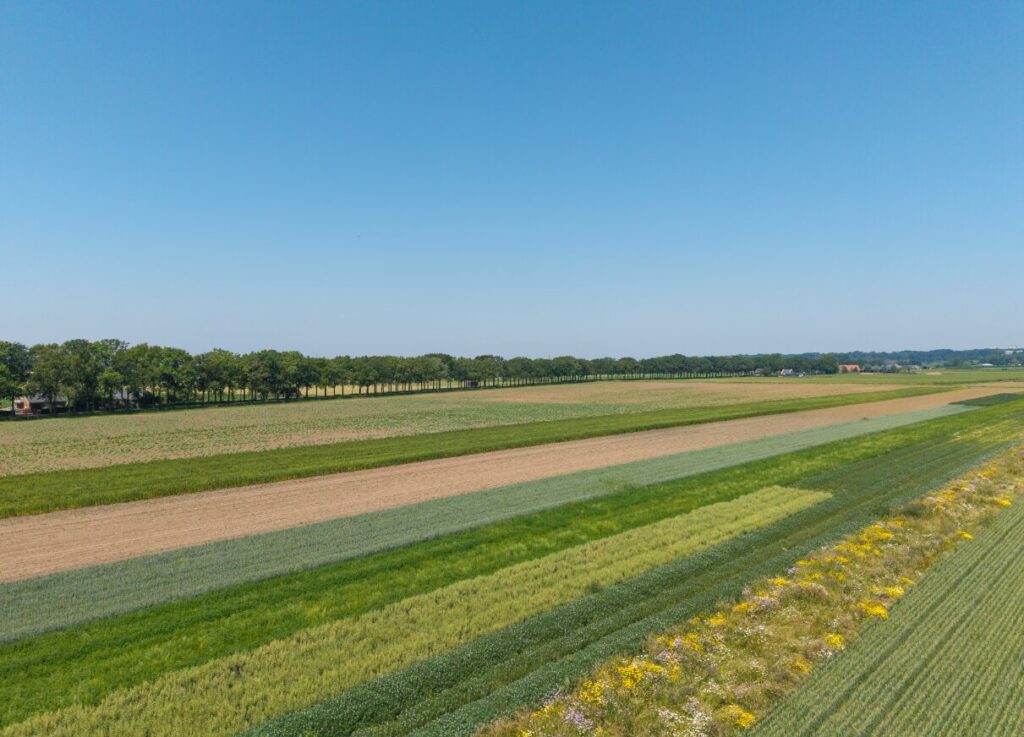
We believe that the solution to transition agricultural practices by farmers lies in cross value chain collaboration, where all partners work together in facilitating the farmer, put in the central, to transition towards regenerative practices. This is not an agricultural transition but more a value chain transition that needs a collaborative approach to come to scale.
Read moreContact person
Regenerative Agriculture Transition Map

The Regenerative Agriculture Transition Map showcases both active landscapes and initiatives currently in development, making regenerative ecosystems visible and enabling collaboration to scale across Europe. Soon to be launched. Be part of it and register now.
Read moreContact person
ReGeNL
Relevant for
Regenerative Agriculture
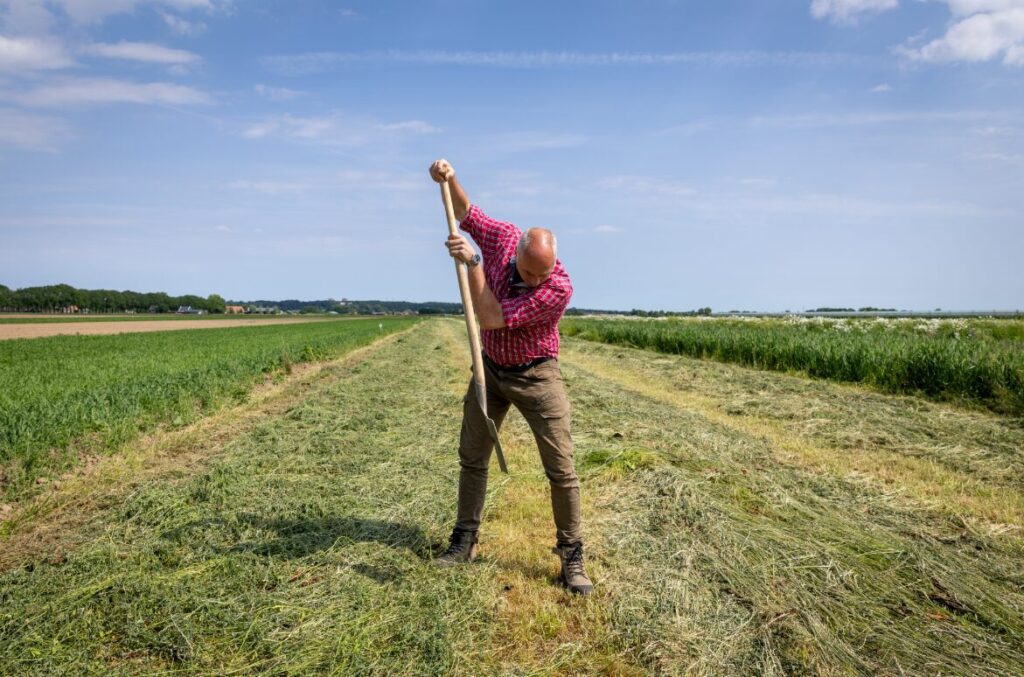
ReGeNL is working alongside Dutch farmers to develop a future-proof agricultural sector, where farming goes hand in hand with soil improvement and nature restoration, while ensuring a profitable business model for farmers.
Read moreContact person
Info box: What is Regenerative Agriculture?
Regenerative agriculture is a system of farming principles and practices that increases biodiversity, enriches soils, improves watersheds, and enhances ecosystem services. Regenerative agriculture is not a fixed set of measures, but a transition path towards a whole ecosystem approach, meaning aiming to work with nature instead of against it. For farm management decisions, the whole farming ecosystem is considered. All the stakeholders that are affected are also taken into consideration, and mutually beneficial relationships are established between them.
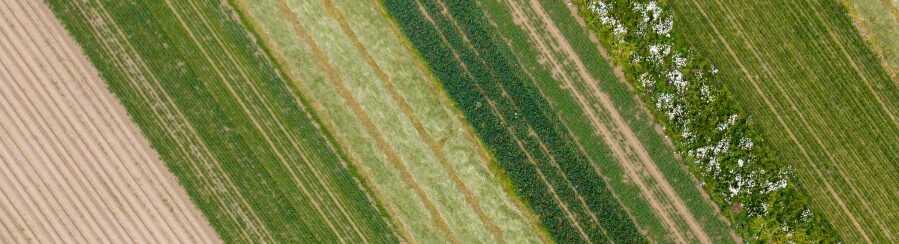
At the heart of regenerative farming is the soil and increasing soil health in a holistic agro-ecosystem. Some of the key techniques that are being used in regenerative agriculture to increase soil health are no tillage, cover crops, increasing biodiversity, rotation cropping, reducing reliance on synthetic inputs, attracting natural predators of pests and integrating livestock. The applying of practices is very context-specific and differs from farm to farm, region to region.
Regenerative agriculture is not determined by a fixed set of practices, but rather a transition towards an integral approach to farming that uses soil conservation as the basis. Therefore, the community uses the following working definition, developed by developed by Van den Hoorn et al. (2024):
“Regenerative agriculture is an integral approach to farming that uses soil conservation as the basis to regenerate multiple provisioning, regulating and supporting services, to actively enhance the ecological performance of farming systems, while sustaining the socio-economic viability. “ (Van den Hoorn et al., 2024)
Curious to read more about regenerative agriculture?
Find our Key resources section below!