
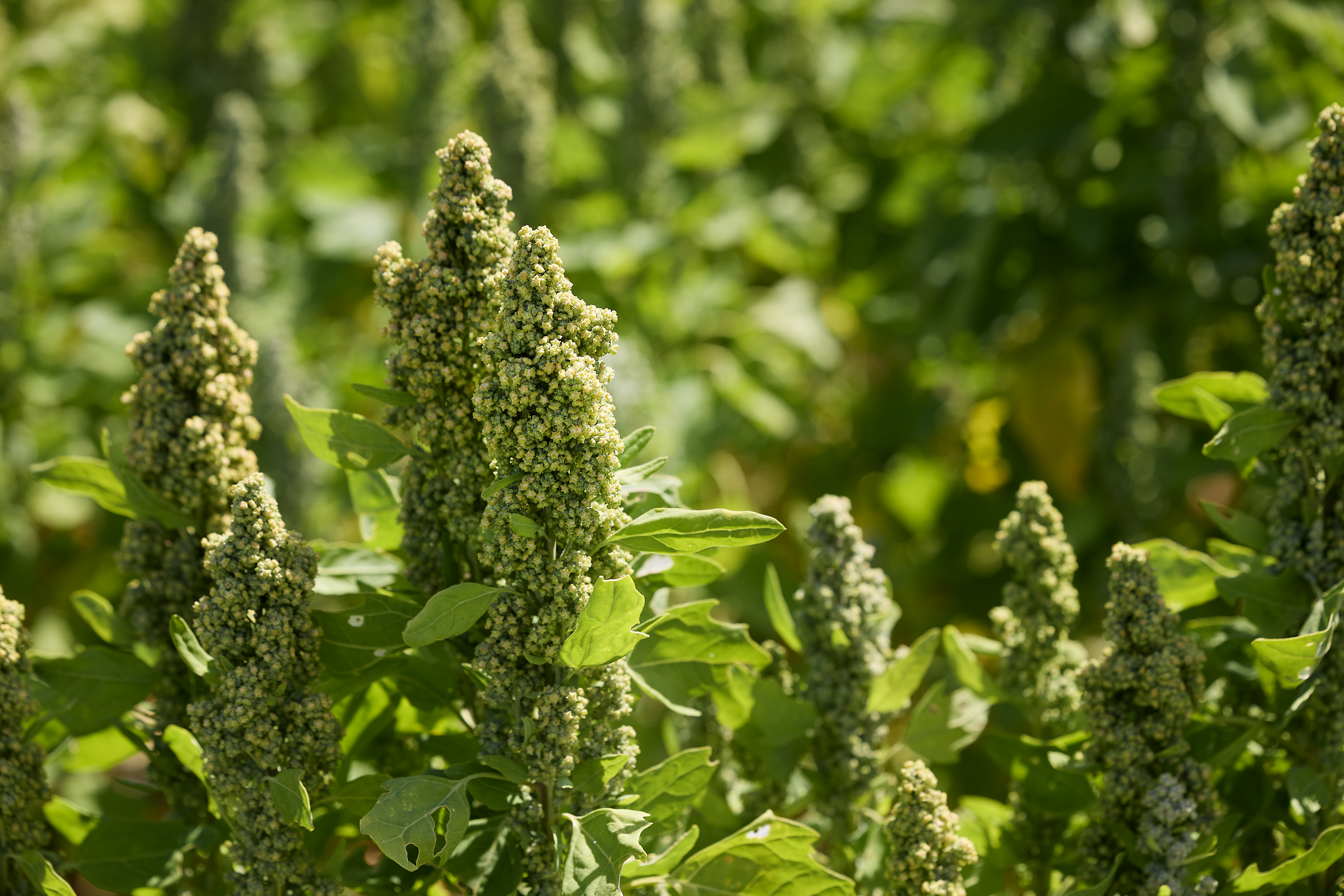
From Dutch soil to Dutch shelves: quinoa as part of the protein transition
Plant Protein Forward has once again shown how collaboration can help build a more resilient protein system in the Netherlands, creating value for farmers, retail and consumers alike.
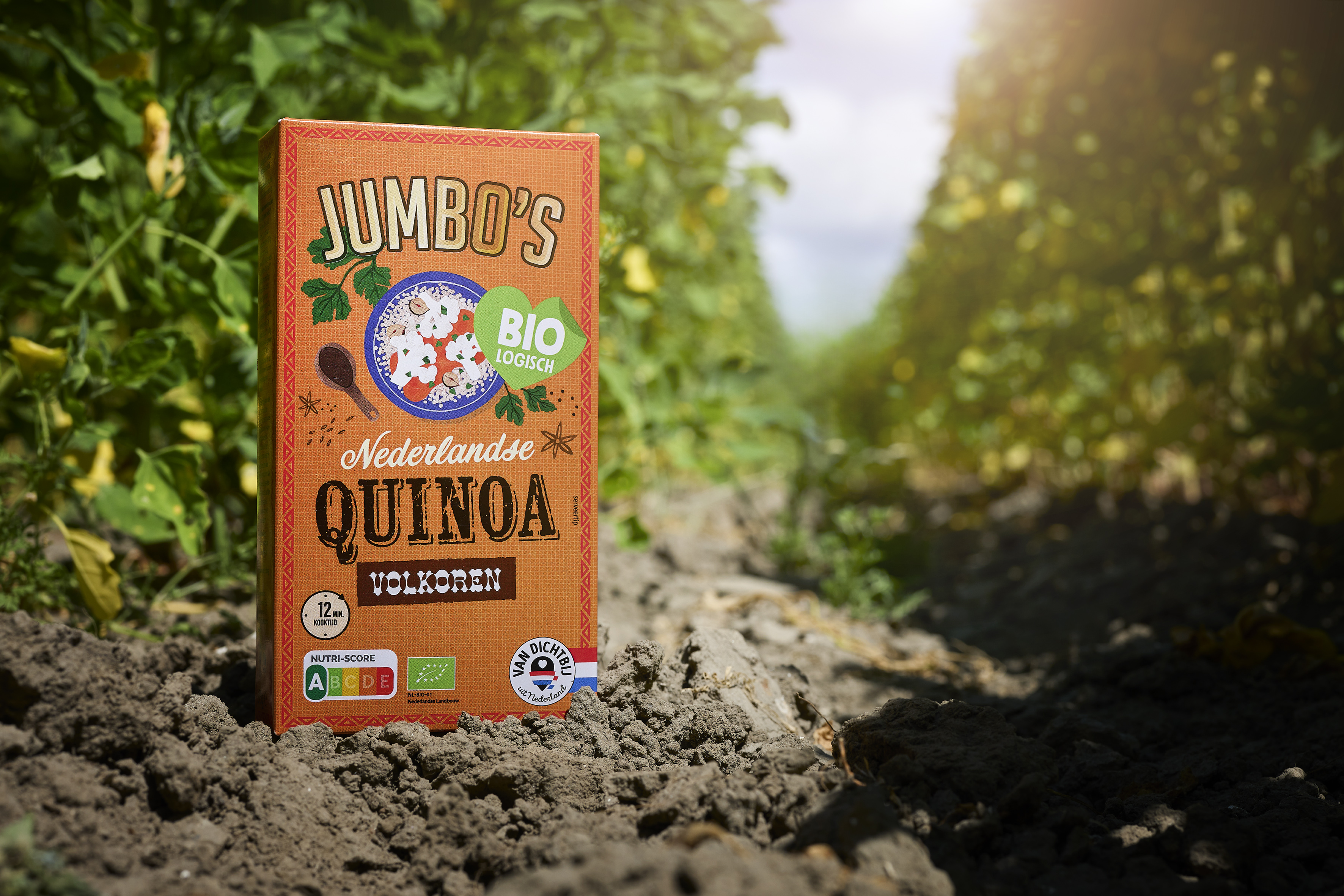
On Friday 3 July, Dutch retailer Jumbo announced that Dutch-grown quinoa will be available in its supermarkets from August onwards under Jumbo’s own brand. More than a product launch, the introduction shows what can happen when farmers, retailers, financial partners, regional governments and transition experts work together around a shared market opportunity.
Behind the launch lies the Plant Protein Forward –transition approach, introduced in 2024 by Rabobank, Foodvalley and the Provincial Protein Network NL. By connecting market demand with local production, long-term collaboration and fair value distribution, Plant Protein Forward helps promising Dutch protein crops to move from pilot to practice.
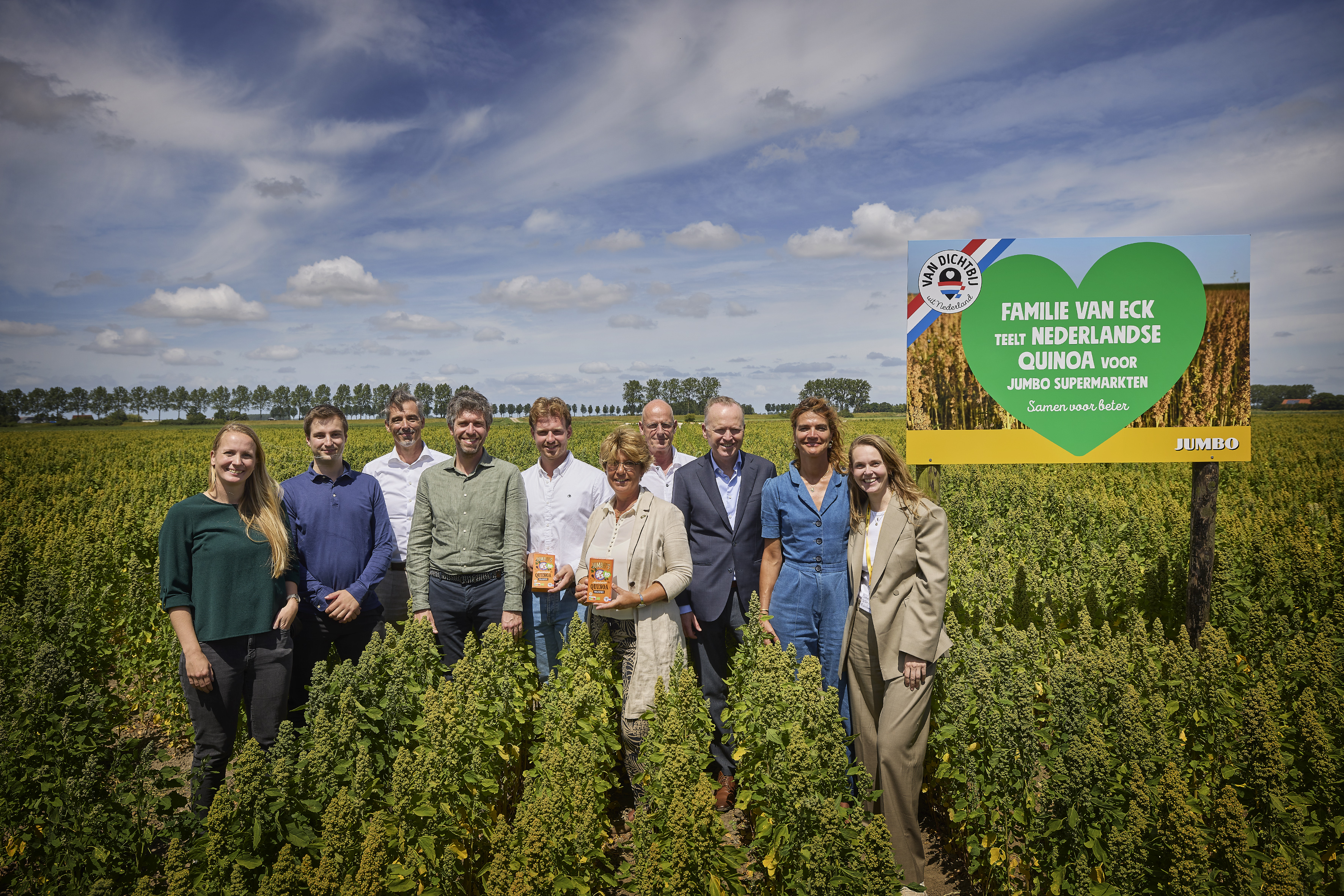
Left to right: Linda de Koning and Ramon Cijffers (Greenfood50), Erwin Meijer and Menno Wigtman (Jumbo Supermarkten), Jac van Eck, Ria van Eck and Cornelis van Eck (farming family), Roald Lapperre (secretary-general of ministery LVVN), Marjolein Brasz (Plant Protein Forward) and Daniëlla Vellinga (Rabobank)
Building the chain together through Plant Protein Forward
Dutch quinoa, supplied by GreenFood50, is the next crop for which Plant Protein Forward has helped establish successful long-term partnerships and market deals. It follows earlier examples such as Dutch edamame, Dutch lupin and plant-based yoghurt varieties based on Dutch (dry) soy.
A key success factor is that Plant Protein Forward doesn’t create new markets from scratch. Instead, it builds on product categories for which demand is already present and growing. Quinoa is a strong example. Market scans performed by Foodvalley in collaboration with Circana, a market research company specialising in consumer and retail data, show a steady growth in retail sales of quinoa-containing products. At the same time, quinoa is still largely sourced from South America, mainly Peru and Bolivia.
Plant Protein Forward ‘s ambition is to shift part of this sourcing closer to home, enabling Dutch farmers and supply chain partners to benefit from the growing demand for quinoa.
Collaboration as foundation
The initiative connects Dutch farmers, food companies, processors and retailers around concrete market opportunities, with collaboration as the foundation for every step. Foodvalley brings in its Practical Transition Approach, knowledge of current market trends and its ecosystem of farmers, companies and retailers. Rabobank contributes its network and business perspective with a strong emphasis on the importance of True Value. The provinces help create regional and national support for new chains to further develop and scale.
Together, the partners focus on the full system: from cultivation and processing to product development, purchasing and market introduction. By bringing these perspectives together early and keeping partners aligned throughout the process, Plant Protein Forward helps promising crops to move beyond pilots towards commercially viable chains. The approach also emphasises long-term collaboration and fair value distribution, giving farmers, companies and regional partners the confidence to invest.
“Plant Protein Forward recognises that future-proof chain collaboration requires more than matching supply and demand. It requires partners to look beyond price alone and work from a shared understanding of value: financial, social and ecological. That transparency helps create fairer value distribution, long-term commitment and the confidence needed to scale local protein chains.”

More than a product launch
The Dutch quinoa launch comes at a time when demand is growing for food that is healthy, sustainable and accessible. Retailers are expanding their plant-based assortments, while consumers increasingly look for products with a clear origin and story. Locally grown crops rich in protein and fibre, such as quinoa, contribute to this shift by strengthening regional agriculture and offering farmers new perspectives in a changing food system.
Turning a crop into a scalable product portfolio and long-lasting partnership, however, remains complex. It requires demand certainty, reliable supply, consumer appeal, and, above all, collaboration between partners who each hold a different piece of the puzzle.
Jumbo’s multi-year commitment is therefore an important signal for the wider market. For growers, the transition only becomes realistic when there is a credible long-term market perspective, including fair pricing and confidence that investments in cultivation and quality will pay off.
The launch moment took place at the farm of one of GreenFood50’s quinoa growers. The presence of Foodvalley’s CEO Marjolein Brasz, Jumbo’s CCO Erwin Meijer, and Roald Lapperre, Secretary-General at the Ministry of Agriculture, Fisheries, Food Security and Nature (LVVN) highlighted collaboration as the key word of the day.
It underlined that this transition is not carried by one organisation alone, but by partners willing to align ambitions, share risks and learn together. It shows that transition theory can be translated into practice through Plant Protein Forward’s ‘Entrepreneuring Apart Together’ approach: cultivating the entrepreneurial talents of farmers and supporting experts, working towards dedicated deals with retailers and caterers, while continuously sharing lessons across the wider network.
Looking ahead
The launch of Dutch quinoa marks another milestone for Plant Protein Forward, but it is far from the final one. New value chains for crops such as buckwheat and seaweed are already taking shape, while opportunities are being explored to replicate this approach across additional crops, regions and food systems in the Netherlands and across Europe.
Every chain contributes valuable lessons on collaboration, market development, and scaling. These insights are continuously used to strengthen Plant Protein Forward’s Entrepreneuring Apart Together approach, making each new chain a shared learning process and a commercial opportunity. By the end of 2027, at least seven crops will have benefited from the programme, creating a growing body of lessons and insights that can help future value chains grow faster and more effectively.
Curious to know more about Plant Protein Forward? Visit the Plant Protein Forward web page or contact Marleen de Jonge, Project Lead Plant Protein Forward at Foodvalley, via Marleen.dejonge@foodvalley.nl