
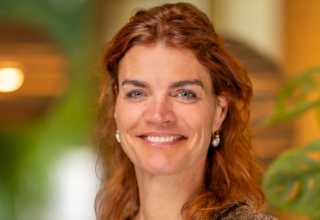
Marjolein Brasz, CEO Foodvalley
I regularly have people asking for a coffee or a short Teams call to talk about their careers. They are remarkably direct. Within minutes they come to the question that is really on their mind.
“Do you think I should change jobs?”
The world feels increasingly unpredictable. Geopolitics is shifting, AI is developing at breathtaking speed, old certainties are disappearing and entire sectors are being reshaped. People know that something significant is happening around them, and become uneasy when they cannot see their own place in it.
The people asking these questions are usually ambitious, driven and eager to contribute. Yet they struggle with the feeling that they are standing on the sidelines while change is happening elsewhere. Some are convinced they would be more effective in another organisation. Others wonder whether they should finally start their own company, because surely that is where things move faster. Quite a few tell me they are exhausted and cannot fully explain why.
What sits underneath many of these conversations is a belief that impact happens somewhere else. Even more importantly, there is often a limited understanding of the role they themselves are already playing and, importantly, in what context.
It makes me think of James Bond. More specifically, everyone around James Bond.
Nobody dreams of becoming the intelligence analyst in a windowless office. Nobody imagines a blockbuster film about the civil servant who quietly approved a budget, the diplomat who opened a crucial door, or the insider who spent fifteen years patiently influencing a large institution from within. Bond gets the Aston Martin. The others make the mission possible.
You may not be the hero of the film. You may well be the secret cell.
System change works in much the same way.
We live in a culture that celebrates founders, disruptors and pioneers. We admire the entrepreneur launching a breakthrough company, the innovator introducing a revolutionary pill to battle obesity or the activist challenging the tax system. Their stories are easy to tell because they are visible.
Yet after spending much of my career working on transitions, I know that visible pioneers are only a small part of the story. An important one. But part of the story. Lasting change depends on a much larger cast of characters, most of whom never step into the spotlight.
Think about the sustainability manager inside a multinational who patiently persuades colleagues to source differently, and who faces headwinds every single day. Think about the civil servant who creates room for experimentation and keeps allocating budgets, time and resources long before success becomes visible. Looking back at the early years of the protein community, many of the people who made today’s progress possible were exactly these people. Numerous examples.
Few of these people would describe themselves as pioneers.
Yet transitions depend on them.
Just as Bond cannot complete the mission alone, system change depends on people playing very different roles. The Two Loops model developed by the Berkana Institute helps us see how those roles come together and where we ourselves may fit. Change often begins quietly, with someone noticing a possibility that others do not yet see. But an idea only starts to matter when others help turn it into something real, connect it to the right people and create the confidence and conditions for it to grow.
This is how the different roles unfold. Pioneers explore what could be, while prototype builders give those possibilities a form that can be tested and improved. As the work gains substance, connectors bring together people, ideas and initiatives that can strengthen it, and nourishers provide the attention, confidence, knowledge, money or network it needs to keep moving. When a promising practice is ready to travel beyond its first setting, bridge builders carry it into established organisations and infrastructure builders create the structures, resources and conditions that allow it to spread. Along the way, stewards preserve what remains valuable in the existing system, while hospice workers help people let go of what has reached the end of its useful life. None of these roles can carry the transition alone. Together, they turn an early possibility into a new reality.

The real magic lies in understanding which role is needed at which moment and which role is yours.
The beauty is that most of us are not confined to a single role. I myself play all roles at some time during the day, week and year. As CEO of Foodvalley, like many of my colleagues, I move between pioneer, to bridgebuilder, nourisher, connector and infrastructure builder many different times per day. Same for my personal life, advocating healthy food, working in nature preservation and investing in initiatives and companies that I feel matter.
Like yourselves. At work you may be a bridge builder helping a large organisation navigate a transition. At home you may be a steward preserving and shaping your family’s habits and values. During the weekend you may become a pioneer by volunteering on a regenerative farm, mentoring a young entrepreneur or supporting a community initiative.
We move between roles far more often than we realise. And that is not reinventing yourself. It is simply playing your role whichever one the moment asks of you, with conscious intent.
Society will not change because thousands of people leave established organisations. It will change because thousands of people, also inside established organisations, decide to move things forward differently. Societal transitions happen when promising solutions move from the margins into everyday practice through collaboration, coalitions and collective action.
Perhaps that is why I sometimes tell people that the answer is simpler than they think.
You might not need to change jobs.
You may simply be the secret cell.
The person quietly gathering intelligence, opening doors, influencing decisions and creating the conditions that allow change to happen.
Admittedly, it sounds less glamorous than James Bond.
History suggests it may be every bit as important.
The real question is whether the role you are playing fits your character, your energy, your family situation and the season of life you are currently in.
That, for me, is the essence of empowerment.
Recognising that you have agency wherever you are. Recognising that influence comes in many forms. Understanding that the future is rarely built by heroes acting alone.
More often, it is built by thousands of secret cells helping new ideas become normal.
