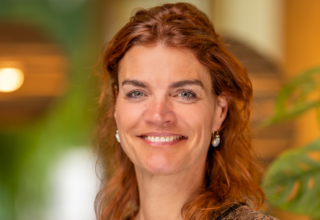
Marjolein Brasz, CEO Foodvalley
Let me tell you a story about Daisy.
Daisy still laughs about that first moment. She was standing in her kitchen, watching people taste her product for the first time. A smooth spread made from upcycled carrot fibres and roasted seeds.
There was a brief silence. Then came the smiles, and finally someone said it out loud: “This is really good.”
In that moment, she thought she had cracked it. And in a way, she had. But what Daisy did not yet realise was this: taste is where everything starts, yet it is not where anything is decided.
At first, her world was still small. She carried jars in her bag and moved from place to place, visiting chefs she knew, meeting friends, and talking to anyone willing to try something new. She stood in kitchens, next to cutting boards and hot pans, watching closely and asking questions. Sometimes she received enthusiasm, sometimes silence. Some people offered sharp feedback, others cheered along.
Encouraged by those early signals, Daisy stepped into a bigger world. She moved towards retail. That was the moment when everything began to shift…
Nothing worked the way she expected.
Doors did not open when she knocked, meetings took time, and when she finally sat across from a category manager, things suddenly moved very fast. She had only a few minutes to explain why her product should earn a place on a shelf that was already full.
She told her story the way she always had, speaking about the ingredients, the mission and the taste. The category manager listened carefully and then asked a simple question: where does this fit within the category? Daisy answered, but not convincingly.
The next questions followed almost immediately: how does this product make the category stronger? Does it bring new buyers, create more value, increase margins or encourage people to buy more?
That changed everything.
It marked the moment Daisy realised she had entered a different logic. She had been talking about her product, while the buyer was thinking about the category. In that world, nothing stands alone. A product does not simply arrive; it replaces something else. One goes out, another comes in.
Daisy walked out of that meeting slightly disoriented. It felt like stepping into a world where the rules were clear to everyone except her.
The next lesson came in the supermarket aisle.
She stood in front of a shelf and watched people walk by. A product similar to hers was there. Not her product, but close enough. No one stopped. No one picked it up. People glanced, moved on, and reached for what they already knew.
In that moment, something became painfully clear.
On the shelf, there is no story.
There is no explanation, no founder standing next to the product, no chef offering feedback. There is only a glance, a quick decision, and a habit. People do not study a product. They reach for what they already know.
Breaking that habit does not happen through a good story. It starts with instant understanding.
Daisy went back to her product. She did not change the taste, because that part already worked. Instead, she changed how people would understand it. She stopped presenting it as something entirely new and began to anchor it closer to what people already knew. Something close to hummus, familiar enough to recognise, yet different enough to stand out.
At first, it felt like a compromise. In reality, it created clarity.
Another lesson followed. In her small world, mistakes could still be corrected. A batch that did not work could be improved. A delayed delivery could be explained. But in retail, everything is visible. If something goes operationally wrong, it shows immediately, on the shelf. A missed delivery or an out-of-stock product quickly becomes visible to everyone.
She started to hear the stories. Products that sold well but failed because supply could not keep up. Listings that disappeared after one missed delivery. Promising deals that quietly fell apart.
It became clear that this was no longer about taste alone. It was about consistency, reliability and being ready before you arrive.
Daisy realised she had been playing a game without fully knowing the rules. And this world did not come with a manual. She needed others to help her understand it, navigate it and build what was needed to succeed.
And that is where Daisy’s story becomes familiar.
Over the past years, I have met many Daisies. Founders with strong ideas, great products and an enormous drive to make things happen. We see how much of the real work starts after the product is there.
It takes many more taste iterations, and even more work on positioning, market readiness, finding the right partners and understanding how the value chain works. That is where companies move from potential to real progress.
That insight sits at the heart of Redesign Food for Value.
In the programme, we often say that founders need to stop building products and start building systems. Because success rarely depends on the product alone. It depends on how well that product is connected to retailers, foodservice partners, investors and consumers.
Through Redesign Food for Value, we help entrepreneurs build those connections and strengthen the capabilities needed to bring innovations successfully to market.
Today, 27 founders are working through that journey together. They test their assumptions with consumers, sharpen their positioning, measure impact, pitch to retail and foodservice buyers, and learn directly from experts who understand the realities of bringing products to market.
This journey, with all its doubts and detours, is inherent to innovation. It takes resilience to keep going where others would stop.
Innovation is not a solo effort. It is an ecosystem at work.
And when that ecosystem works together, ideas become products, products become businesses, and businesses create real impact.
At Foodvalley, we help founders, farmers and innovative companies navigate this world. From a strong product to a strong place in retail, through the facilitation of new (balanced) long-term partnerships along the chain in order to share risks and co-develop and by providing the foundation for fair margins (for all involved).