
Dutch food sector builds a strong position in balanced proteins
How can the knowledge and experience developed around hybrid products in the Netherlands be leveraged internationally?
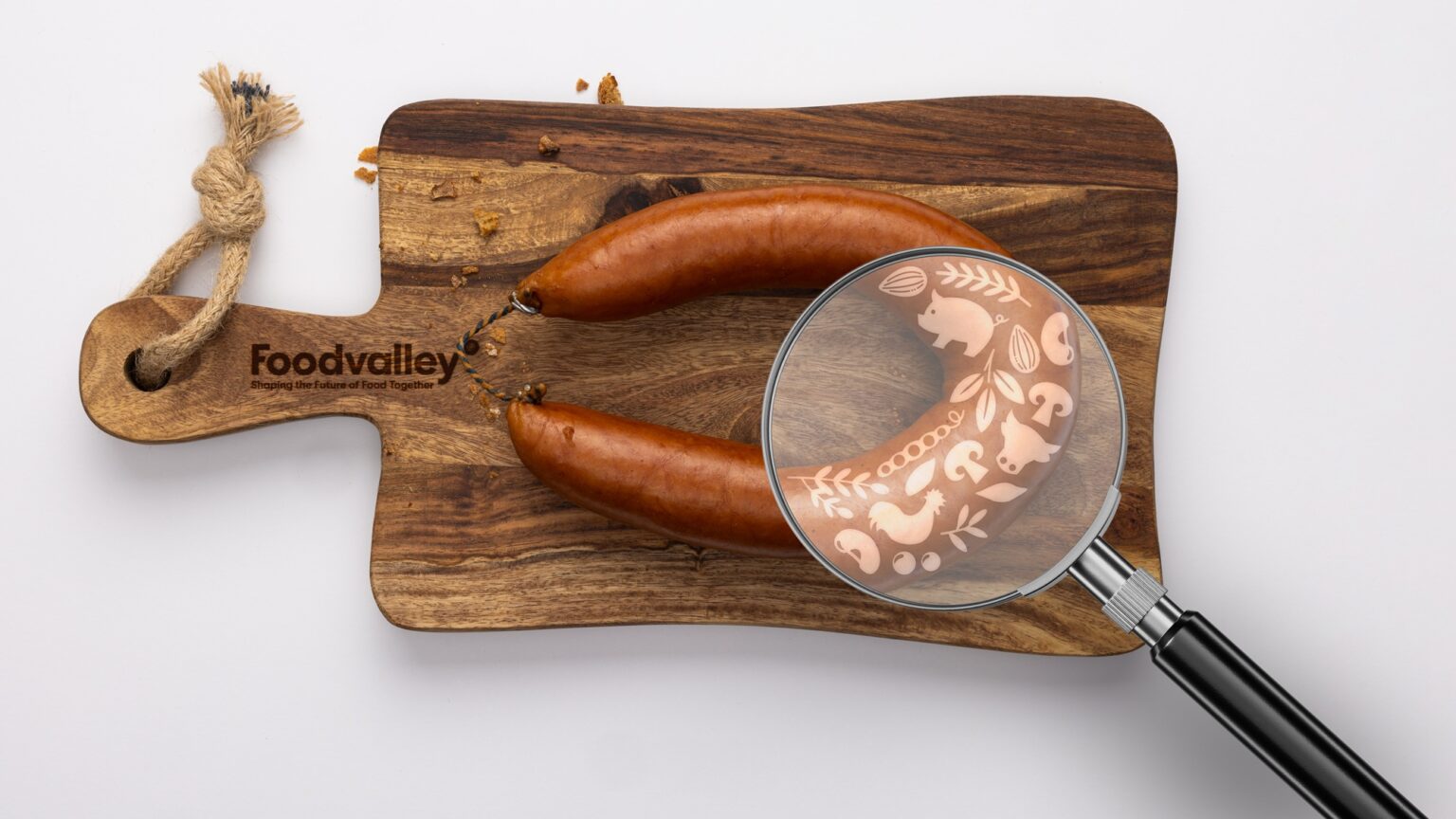
Hybrid meat and dairy products, which combine animal and plant proteins, are receiving increasing attention. The Netherlands has built a strong ecosystem in this field, bringing together producers, ingredient suppliers, retailers, foodservice companies and other value chain partners. More than 50 of the over 530 companies and organisations featured on the Protein Transition Map NL are now active in the hybrid products space.
The New Food Conference in Berlin on 25 August once again brought together Dutch and international players involved in the protein transition. For Foodvalley, it was a natural moment to look beyond national borders and explore how the knowledge and experience built around hybrid products in the Netherlands can be applied internationally.
For many years, The Protein Community has worked to strengthen the protein transition by connecting businesses and other stakeholders across the value chain. Foodvalley now aims to work with companies and other relevant parties to further explore what is needed to unlock the international potential of Dutch expertise and experience in hybrid products.
Accelerating international progress through knowledge sharing
Internationally, the term Balanced Proteins is increasingly used to describe products that combine animal and plant proteins. In the Netherlands, hybrid has become a recognised and widely understood term for these products. While the opportunities are significant, successfully scaling these products in retail and foodservice often proves to be a lengthy and unpredictable journey.
Since 2025, collaboration between Foodvalley and the US-based Food System Innovations has supported the exchange of knowledge and market insights between Europe and the United States. By connecting expertise, practical experience and business networks, organisations can learn from one another and gain a better understanding of what is needed to advance hybrid products in different markets.
Opportunities alone, however, are not enough. In day to day business, reaching the shelf or finding the right value chain partner can be a major challenge. Established systems and consumer habits can slow innovation. For smaller, innovative companies in particular, there is a constant search for answers: how do you find the right partner, achieve sufficient scale and competitive pricing, and create products that appeal to retailers, foodservice operators and consumers alike?
This is exactly where The Protein Community, with more than 150 participating companies, is working to lower barriers. By connecting producers, ingredient suppliers, retailers, foodservice operators and other stakeholders, sharing knowledge and market insights, and enabling new collaborations, the entire value chain can become stronger.
Blends with benefits: from end product to ingredient
These connections can sometimes create unexpected opportunities, as experienced by Schelte Lettinga of Sparc Kitchen, a producer of plant-based and blended meat products. A discussion that started around selling finished products eventually led to a completely different type of partnership.
“I was in contact with a meat processor that supplies many wholesalers, with the idea that we could produce part of their product range. First, I presented our fully plant-based range, then a hybrid meatball. Each time there was no interest because they already offered similar products themselves. Then I suggested they try my wheat texturate. I have since received my first order for a pallet of wheat texturate.”
This example shows that expertise developed for hybrid or plant-based products can also create value elsewhere in the value chain. A producer of finished products may unexpectedly become a valuable ingredient partner.
New collaborations across the value chain
For smaller companies, new connections can also help further develop products and supply chains. Through The Protein Community, SNX Food found a new local supplier of the pulses used in its snack products.
Tessa Rijn of SNX Food explains:
“I met Paul van Zanten from Inveja at a The Protein Community event. Coincidentally, we were looking for a local supplier of pulses as an ingredient for our snacks, and we started working together.”
These examples illustrate the value of an ecosystem where companies with different expertise, products and positions within the value chain can more easily find and collaborate with one another.
Get involved
- Is your organisation active in the hybrid/Balanced Proteins space and interested in exploring opportunities for international scale-up? Get in touch with Leo Koning at Foodvalley (leo.koning@foodvalley.nl).
- Download the report Balanced Meat & Dairy in Dutch Retail for an overview of hybrid products currently available in Dutch supermarkets.
- Not yet a member of The Protein Community? Schedule a no-obligation introductory meeting and discover how companies across the protein transition value chain are collaborating.