
Beans fit perfectly with health trends
The updated Dutch Dietary Guidelines (Schijf van Vijf), the protein transition, and the growing focus on health are driving increasing interest in pulses. According to Jasper Bringsken, CEO of Jamael Food Group, this presents major opportunities for Dutch cultivation and processing. “Beans have so many positive qualities: they are rich in fibre, protein, vitamins, and minerals. We want to put the goodness of nature on a pedestal.”
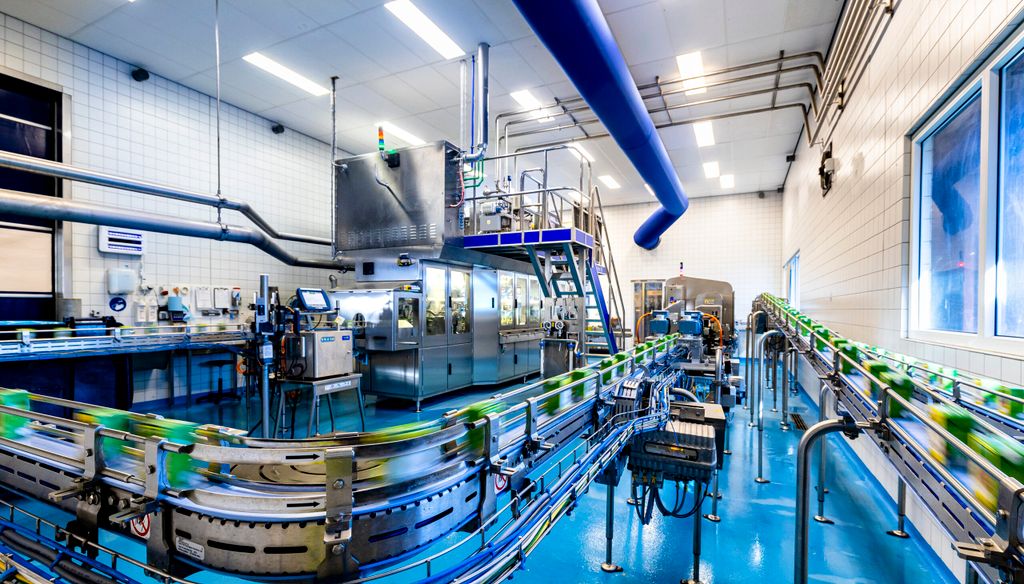
Photos: Eric Bakker Fotografie
Jamael Food Group includes several food processing companies in the Netherlands and Tanzania, such as BOON, Baltussen Konservenfabriek, Holland Special Foods, and African Vegetables Company. The group focuses strongly on plant-based foods, pulses, and organic products, producing both under its own brands, such as BOON, and for private label. “We strongly believe in local cultivation, local processing, and local consumption,” says CEO Jasper Bringsken. “Regional supply chains are becoming increasingly important due to geopolitical tensions, climate change, and fluctuating weather conditions.”
Many pulses can be grown perfectly well in the Netherlands, he explains. “However, the cost is much higher than pulses from countries like China. This is due to factors such as land prices, labour costs, energy, and diesel. Producing at global market prices is simply not feasible in the Netherlands.”
Control of the supply chain
Despite this, Bringsken sees significant opportunities for pulse cultivation in the Netherlands. “You need to look beyond just cost price. More parties need to consciously choose Dutch production and be willing to commit long-term, so farmers have investment security and can build a stable, future-proof chain. Only then you can collaborate sustainably across the entire chain. With our own brand BOON, we have full control and are willing to pay more than if we sourced on the global market. Our goal goes beyond BOON, we hope other brands and supermarkets will also dare to take this step.”
Continuity is essential. “It takes time to test crops, build expertise, and find farmers willing to take on such a journey. Farmers need stability and long-term certainty so they can actually carry the risk.” Next to that, communication also plays a role: “We clearly show on the front of our packaging that our beans come from the Netherlands.”
More focus on origin
Bringsken observes that origin still plays a limited role in retail pulse products. “Most supermarkets still focus primarily on the lowest price rather than specific sourcing. In countries like Germany and France, there is much greater awareness of product origin. As a result, some pulses grown in the Netherlands end up being sold in Germany, where buyers are willing to pay for European production. In France, requirements such as ‘grown in France’ and ‘processed in France’ are often included in supermarket tenders. These agreements create more continuity in the supply chain. That is essential for developing and maintaining local production and processing and we believe this is also possible in the Netherlands.”
Political debate
Bringsken does see growing interest in pulses in the Netherlands. “Due to the protein transition and the updated dietary guidelines, where plant-based products are more prominent, beans are getting more attention.” However, he regrets that beans are increasingly becoming part of a political debate. “That is unnecessary, because the product already has so much inherent value. Beans are naturally packed with protein, fibre, vitamins, and minerals, and therefore align perfectly with today’s health trends.”
Jamael Food Group actively responds to this with both branded and private-label products.
“We try to further enhance and highlight the goodness that nature already provides. We do this not only with BOON but also through private labels. In doing so we try to get more organic pulses into Dutch supermarkets.” As an example, Bringsken mentions the transition from cans to Tetra Pak packaging in Jumbo’s pulse assortment. “This was not only a packaging change but also a shift from conventional to organic.”

Accessible concepts
The company also works with a white-label concept, with the first products now available at Lidl. These are organic products where the focus is not on branding but on the product itself, both in packaging and communication. “It’s not about brand experience, but purely about the organic pulse.” These concepts aim to introduce consumers to organic pulses in an accessible way. “Visibility in-store is very important. Expanding shelf space for organic pulses has a proven positive effect on sales of pulses in the supermarket.”
Many opportunities
Looking ahead, Bringsken sees many opportunities. “Interest in pulses continues to grow year after year. This is linked to changing eating habits and the influence of international cuisines, which encourage consumers to use a wider variety of pulses. Chickpeas are a good example.”
He also believes the health benefits can be emphasized much more strongly. “Beans are rich in fibre and protein, we should highlight that much more.” Still, taste remains decisive. “A product can be very healthy, but if it doesn’t match its alternatives in taste, it will never become widely accepted. That’s why we strongly focus on flavour and inspiration, for example, recipes on packaging and beans in global sauces that help consumers easily prepare a tasty meal.”
Long-term vision
As a family business, Jamael Food Group takes a long-term perspective. “In the Netherlands, we are rapidly losing both growers and processors. This is not only happening in our sector but across the entire processing industry. Factories are closing while consumption remains stable, that concerns me. Building knowledge and industry takes far more time than dismantling them.”
Bringsken emphasizes that the Netherlands is a global leader in environmental standards, sustainability, and processing. “If consumption remains the same but production moves abroad, we are not solving the problem globally. Only with a long-term vision we can create stability in the chain, especially now that costs are rising and price pressure is increasing.”
Collaboration is crucial. “You can’t create a movement on your own. That’s why it’s important to work with partners who share the same goal. Our company has been a partner of The Protein Community for some time now. We experience many positive effects from that, both in collaborations and in raising awareness of pulses more broadly.”
Source: EiwitTrends
Read the original (Dutch) version of this article at Eiwittrends.nl: