How Nextkidney used two SME Innovation Vouchers to de-risk its supply chain
Growing a critical medical ingredient closer to home
For many startups and scale-ups, the hardest part of innovation isn’t the idea, it’s proving it works at a scale, and to a standard, that the market can trust. That challenge becomes even greater when a critical raw material depends on a single source supply chain. Although Nextkidney is a medtech company, the voucher-funded challenge was firmly rooted in agri-food: cultivating a bean crop in the Netherlands to secure the enzyme supply. The Foodvalley SME Innovation Voucher, made possible by the Regiodeal Foodvalley, exists to help companies close exactly that kind of gap. Nextkidney, the company behind the portable home dialysis device NeokidneyTM, is one of the clearest examples yet of what that support can do.
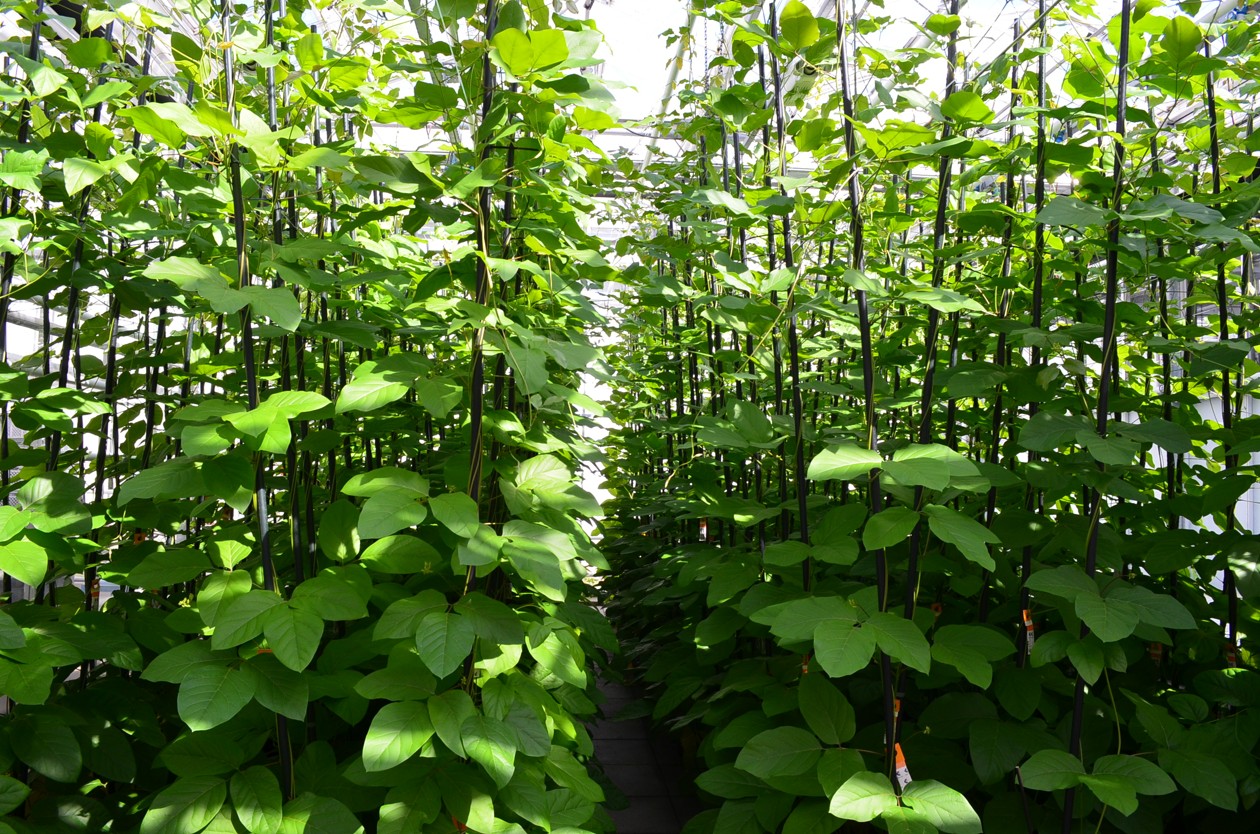
Nextkidney’s device relies on an enzyme that breaks down waste products in used dialysis fluid, so patients need only a fraction of the fluid volume required by conventional treatment. That enzyme comes from a bean crop that, until recently, was reliably grown only in China. Over two consecutive SME Innovation Voucher projects with Unifarm, Wageningen University’s plant research facility, Nextkidney has turned that single point of dependency into a Dutch cultivation programme now involving a growing consortium of local growers.
A mission that started with a foundation, not a founder
Nextkidney’s story is unusual in that it wasn’t built by entrepreneurs chasing a market gap, it was co-founded by the Dutch Kidney Foundation (Nierstichting), together with Dutch health insurers, patients’ associations and medical professionals. That background still shapes how the company operates, says Harmen de Jongh, who has been involved with Nextkidney’s protein acquisition strategy since 2021.
Access to expertise Nextkidney didn’t have in-house
Growing an unfamiliar tropical crop under Dutch greenhouse conditions required specialist plant science expertise that wasn’t available within the company. Through its first SME Innovation Voucher, Nextkidney worked with Unifarm to find out whether the crop could be cultivated in the Netherlands at all, and, once it could, to work through why the earliest harvests didn’t perform as hoped. After several growing cycles and refinements, the results exceeded expectations: the Dutch-grown crop ended up producing roughly twice the enzyme activity yield of the imported alternative.
Risk mitigation for everyone in the chain
With the first voucher proving the concept, the second, awarded to Nextkidney in early 2026, focused on fine-tuning the growing conditions further before handing a cultivation protocol to commercial growers. Some of what that requires isn’t something a grower can test on their own land. “These are commercial businesses with their own crops on the line,” de Jongh explains. “You can’t just run an experiment on that.” That kind of testing stays inside Unifarm’s controlled facility instead, so that the current consortium of six growers in West Brabant and Westland can eventually put a ready, de-risked protocol into practice, without carrying the experimental risk themselves. Asked what would have happened without the second voucher, de Jongh is direct: “I don’t think we would have taken this year’s project on without it, which could have put pressure on the market-introduction of the NeokidneyTM to become accessible for patients experiencing severe kidney failure”.
The road ahead
Nextkidney expects to complete CE certification for the NeokidneyTM next year, backed by clinical trial data from around 1,000 patient data at UMC’s Utrecht, Leiden and partner hospitals in France and Belgium. Its filters will still rely partly on imported beans for now, but the target is for the 2028 supply to come majorly from Dutch soil, turning a former single point of uncontrollable risk into a local, resilient supply chain shared between a medtech company, and a growing group of Dutch growers.
Could your SME use the same kind of support?
Nextkidney’s project is a good example of what the SME Innovation Voucher is for: a capability gap that a specialised facility can close, but that would be too costly, too risky, or simply too far outside a company’s own expertise to tackle alone. If a piece of your product, process, or supply chain depends on knowledge or equipment you don’t have in-house, the voucher offers a low-threshold way to get access to it.
Find out if your project qualifies and how to apply for an SME Innovation Voucher here.