
Marjolein Brasz, CEO Foodvalley
What does it really take to move breakthrough food and biotech innovations beyond the pilot stage? More than promising technology alone, it requires the right conditions for industrial scale-up to happen.
In this blog, I explore why FOAK factories – first-of-a-kind facilities – are such a crucial part of that journey, and why this is becoming an increasingly important question for Europe’s food system and that we are as a result thereof putting our efforts on this in the Food2040 agenda.
A quiet shift beneath the surface
It has been a while since Peter Wennink presented his recommendations to the national government, with considerable attention and visibility.
Since then, the visible conversation has naturally moved elsewhere, as conversations tend to do. Meanwhile, something quieter has been happening underneath: exploration across the ecosystem, increased alignment and steady work on building concrete propositions for the Food2040 agenda.
The Wennink advice sits in the middle of a wider movement. A new government context, shifting geopolitics, a growing focus on food security and strategic autonomy, an awakening Europe, and increasing market pull for scale rather than pilots are all creating a kind of gravitational field.
Several forces are converging on a shared question:
How do we move innovations in food and biotech from promising ideas into real industrial production?
From pilots to industrial capacity
Across the broader ecosystem, something interesting is happening. A broader coalition is taking shape. Industrial players, large and small, financial institutions and innovators are increasingly finding each other around this shared question. Different worlds, with a growing sense of shared direction.
This is not exactly new. Two years ago, this direction was already clearly articulated in the open letter to the Cabinet, together with a growing coalition of partners working on the same underlying challenge:
How to move from pilots to scale, and from good ideas to real industrial capacity.
This conversation has evolved, the urgency has increased, and the direction has remained remarkably consistent.
FOAK factories: where innovation becomes industry
In the middle of this sits something quite important, even if the name sounds technical: FOAK factories, or first-of-a-kind facilities.
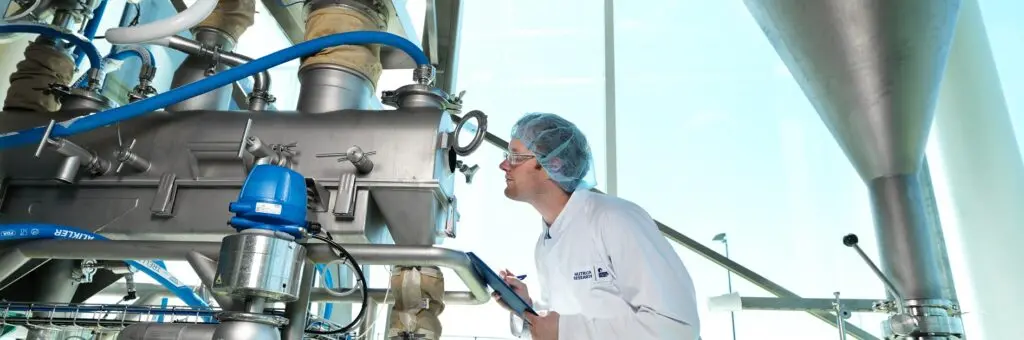
This is the moment where innovation becomes industry. A FOAK factory is the first full-scale production environment where everything comes together at once: volumes, costs, supply chains, quality, reliability, contracts and uncertainty. Everything becomes real simultaneously.
This phase matters deeply. Pilots are where we learn. FOAK factories are where we prove. Pilots generate knowledge, while FOAK facilities translate that knowledge into industrial capacity. That capacity determines how the food transition moves from ambition to reality, and how well Europe is able to stay in the game when it comes to food security and autonomy.
De-risking the first step to scale
What is different now is how this step is being approached. Instead of isolated risk sitting with a single party, a shared structure is emerging.
Demand is becoming a lever for de-risking investment, with food manufacturers moving from “interested” to signed conditional offtake commitments before factories exist at scale. This is a powerful step, and one that will need to be taken jointly in the coming period.
At the same time, financial and public instruments are reshaping the investment landscape. Institutions such as Invest-NL and the upcoming National Investment Institution, together with state-backed guarantees, enable a different kind of risk sharing and make it easier for private capital to engage in first-of-a-kind industrial scaling.
Together, these elements form a scaling infrastructure that connects innovation, demand and finance into a more coordinated system.
Why this matters now
The timing of all this reflects geopolitical uncertainty, fragile supply chains and increasing attention to food security. In that context, innovative ingredients and products are not only relevant to sustainability, but also to resilience and strategic autonomy across Europe.
FOAK factories sit at an important intersection. They are technical milestones, but also building blocks of broader system stability. They are where industrial capability anchors itself in a changing world.
Turning alignment into action
Within this evolving landscape, Foodvalley works with a growing coalition of innovative companies, large and small, financial actors and public-private organisations, including Invest-NL, Invest International, NFC and PlanetBio.
The focus is practical: how to make FOAK factories happen.
This work aligns demand signals, enables finance, and coordinates action across the ecosystem so that these first-of-a-kind facilities move from concept to reality.
And yes, this is very much work in progress. It is also work that has been in motion for quite some time. But there is a clear opportunity to contribute and engage now.
Interested to join? Please reach out to Guido Laman, Head of Strategy at Foodvalley.