Marjolein Brasz, CEO Foodvalley
We often talk about the “quiet transition”. The idea that the food system can change gradually, by improving what is already there. Making everyday food healthier, tastier, more affordable and better for the planet, without forcing consumers to change their habits overnight. Through improvement. By lifting the bar. For everyone.
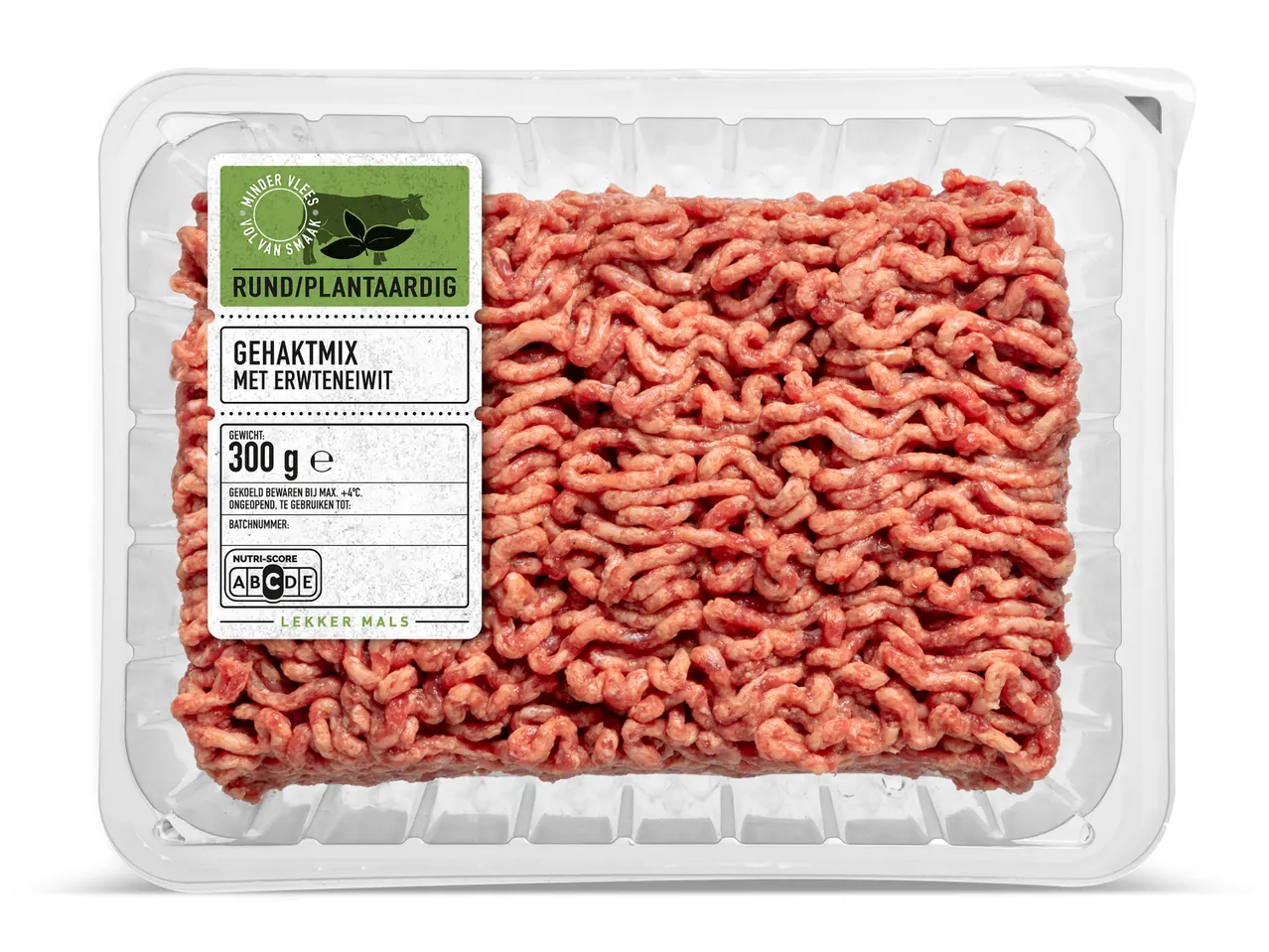
Balanced products follow that logic. They combine plant and animal ingredients in familiar foods, partially replacing a share of meat, fish or dairy with plant ingredients, to improve nutrition, taste, affordability and/or footprint, while keeping products recognisable and easy to use.
Improving what people already eat.
A familiar idea, not a new one
In reality, this is not new. Blending ingredients has long been part of food production. Breadcrumbs in meatballs, soy or cereal proteins in sausages, vegetable fibres in processed meats have all been widely used for texture, juiciness, stability and affordability.
In several European countries, regulations even defined minimum meat contents, implicitly recognising that these products were always blends. The functional logic never disappeared, but the narrative later shifted toward purity and “100% meat”.
Today’s balanced products are, in many ways, a return to that familiar approach, now shaped by goals around health and sustainability while still improving taste.
A quiet renaissance in the aisle
Our recent baseline analysis shows that hybrid, blended or balanced products are quietly re-emerging. Across Dutch supermarkets, more than one hundred plant-enriched meat products were identified, particularly in high-volume categories such as mince, burgers and sausages.
On average, these products already contain more than ten per cent plant ingredients, with some significantly higher. Several are competitively priced and, in many cases, show improved nutritional profiles compared to their traditional equivalents.
Retail perspectives point to a gradual, consumer-led shift. Consumers are open to more plant-forward eating patterns, but this does not always translate directly into purchase behaviour. At the same time, interest in pulses is increasing. As a result, these ingredients are being given more prominence in assortments, which in turn drives sales.
The movement is therefore not a sudden shift, but a stepwise exploration of how to do this well, together.
In many cases, the plant ingredients are not emphasised as the main story of the product. The change happens quietly, plant ingredients communicated through formulation rather than positioning. A deliberately chosen subtle communication strategy.
Reformulation is normal
This is not unusual. Product composition changes all the time. Recipes evolve. Salt is reduced. Fibre is added. Fat levels are adjusted.
Bread in the Netherlands, for example, has undergone a gradual reduction in salt over the past decade, without consumers experiencing a sudden shift. A similar reformulation has occurred in breakfast cereals, dairy products, and ready meals, where reductions in sugar, salt, or fat have been implemented step by step.
Often this appears as “improved recipe”, “better taste”, “now with added fibre” or “extra protein”. Sometimes it is barely highlighted at all.
This raises a fair question: why is gradual reformulation widely accepted in these categories, but more sensitive when plant ingredients enter meat, fish or dairy? Especially since many meat products were never single-ingredient products to begin with. A burger or sausage is already a composition.
When quiet becomes visible
Media coverage following the baseline analysis largely converged on one dominant frame: transparency. Are consumers aware? Should this be made more explicit? That reaction is telling. A transition may start quietly, but once it scales, it becomes visible. And once visible, it enters public debate for you and me to talk about during dinner 😉.
At the same time, the sensitivity around transparency is legitimate. Trust is foundational in food. When familiar products evolve, consumers want clarity, even if they are not actively seeking it day to day. We all know that our eating patterns are not sustainable in the long run. But also expect openness.
Mind you, real resistance is often amplified by a small, vocal minority while a much larger group remains out of view and is willing to consider other options, and it is frequently temporary and situational, as seen in examples such as smoking bans where initial opposition fades and gives way to new social norms once change is implemented (ref: Marleen Onwezen, WUR, on resistance to change). The majority is open for change.
However, the quiet transition works best when transparency evolves alongside adoption.
Behaviour before beliefs
Behaviour often changes before beliefs. People first respond to taste, price and convenience. The story follows later.
We have seen this before. Wholegrain bread spread before the health narrative fully landed. Reduced-fat products gained traction before consumers actively looked for them. Plant-based milks entered coffee culture long before broader dietary shifts followed. Balanced products follow a similar pathway: small improvements in everyday choices that gradually shift the baseline.
This is how change happens. Gradually. Through better defaults.
The real question
The quiet transition does not stay quiet. Once change reaches scale, it requires an explanation that builds understanding. Explanation that helps consumers move along with the direction of travel.
Most people know they may need to change their eating habits. But knowing is not the same as doing. The quiet transition tries to bridge that gap by improving familiar foods and making the healthier choice easier.
The consumer, however, is not one group. Expectations differ. Some want clarity, others prefer familiarity. So the real question becomes: how do we lift the bar for the majority, while respecting diversity? How do we help each other move forward, with an open mind, and keep trust intact as behaviour evolves?
Perhaps the lesson is that there is no single right answer. Transitions unfold differently depending on context, products, and timing. How we communicate about change is therefore part of the transition itself. It requires probing, testing, learning, and adapting. Trying different approaches, seeing what builds understanding, and adjusting as we go. Not assuming we know upfront, but discovering together what works, where, and for whom.
Figuring it out together. In order to lift the bar, together.
More about our balanced approach >