Insights from the action table on circular side streams in food chains
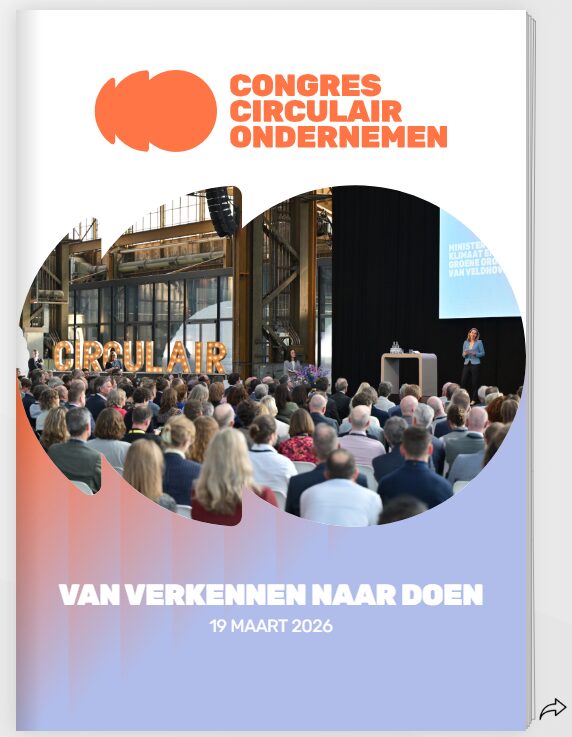
19 March Congres Circulair Ondernemen in Utrecht (NL)
From ambition to implementation: circular food systems require systemic change
The Week of Circular Economy was kicked off with the Congres Circulair Ondernemen 2026 in Utrecht, bringing together over 800 entrepreneurs, policymakers and investors, alongside Queen Máxima and Minister for Climate and Green Growth Stientje van Veldhoven. A key highlight was the presentation of the State of Circular Entrepreneurship to Queen Máxima, a report based on over 1,000 measurements showing a clear trend: while strategic ambition around circularity is rapidly increasing, implementation still lags behind – underlining the need for systemic change.
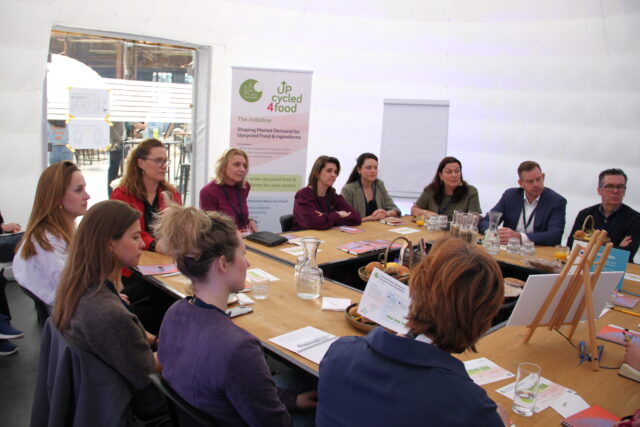
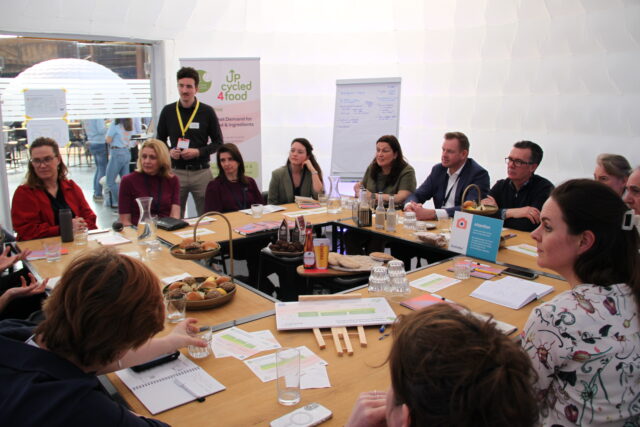
Foodvalley and Route Circulair jointly hosted an action table on circular side streams in food chains.
The central question: how can side streams be structurally utilised and scaled towards a new ‘normal’ in the food system?
The conclusion was strikingly unanimous: the issue does not lie in supply. Unavoidable side streams are abundant. The real challenge is creating stable demand and a system that enables scaling.
While consumers are often seen as a key driver, in practice acceptance remains fragile and price continues to be decisive. As a result, companies face several structural barriers, including price pressure, limited financial advantages compared to linear alternatives, complex value chain collaboration, and unclear or restrictive legislation.
From niche to new normal
At the same time, the session highlighted clear opportunities to overcome these barriers. Gradual product reformulation – step-by-step adjustments to recipes – proves to be an effective way to integrate circular ingredients without increasing consumer resistance. Product quality, and particularly taste, remains the essential precondition.
Financial incentives and regulation were also identified as critical levers for scaling. This includes rewarding circular solutions and taxing linear alternatives, or introducing minimum percentages of circular ingredients in products.
In addition, smarter use of internal side streams can deliver both emission reductions and cost benefits. Transparency towards consumers can support this transition, provided it is carefully designed – for example through layered communication such as QR codes, allowing interested consumers to access more detailed information without overwhelming others.
Collaboration as the key to scaling
A key insight from the action table is that the transition towards circular food systems requires close collaboration across the value chain. Standardisation, scalability and better alignment with the needs of large buyers such as foodservice providers and multinationals are essential to move from pilots to structural adoption.
The shared ambition towards NCCE 2027 is therefore clear: to work towards a new normal in which circular ingredients become a standard part of food products. This requires concrete agreements, value chain-wide collaboration, and a system in which circular choices are also economically attractive.
From insight to action
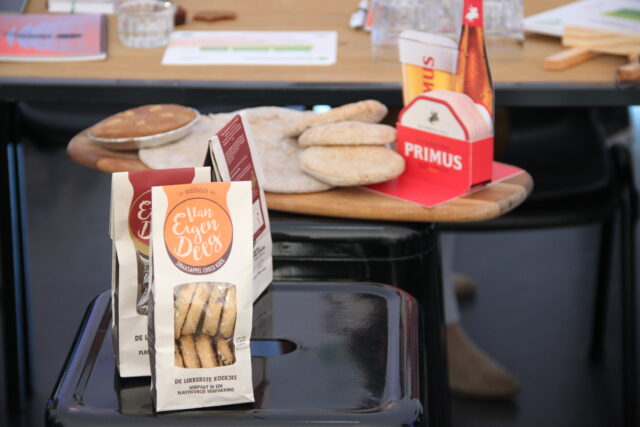
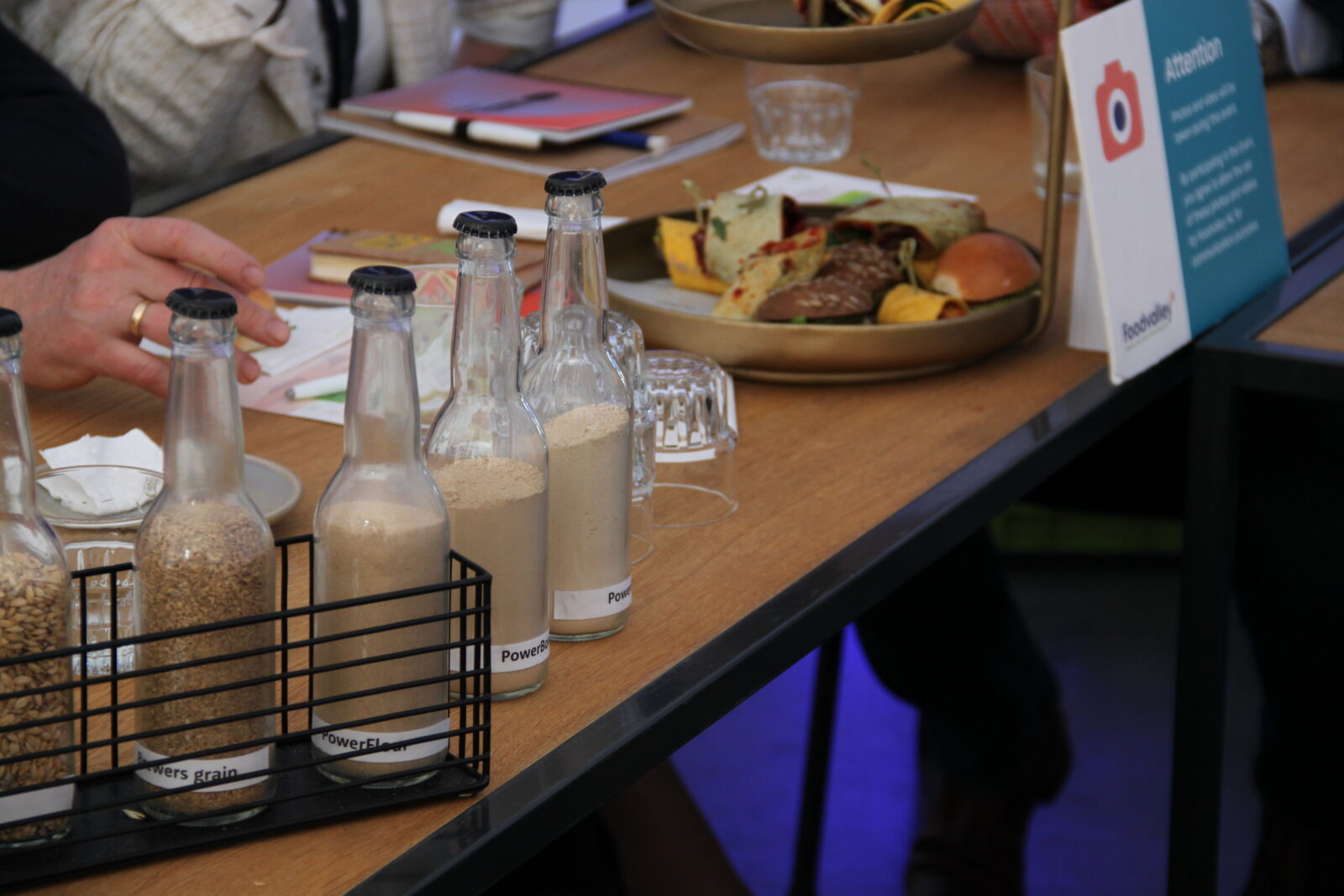
The discussion at the action table – with brewers’ spent grain as a concrete case – demonstrated that the shift towards circular food systems is already underway, but acceleration is needed.
Foodvalley continues to drive this transition through the Upcycled4Food Initiative, in which partners collaborate on scaling applications for side streams and developing new circular business models. Broader community efforts further support knowledge sharing, collaboration, and the visibility of innovations contributing to a future-proof food system. There were also identified several clear perspectives on the role of government, which will be featured through an to be published conference magazine with insights from all action tables.
The message from the congress and the action table is clear: the ambition is there, the resources are there – now it is time to design a system in which circular solutions become the norm.