
Upcycled food goes mainstream only when the whole chain moves
Insights of The Upcycling Community Break-out
Innovation Insights on 25 March 2026
Upcycled food goes mainstream only when the whole chain moves
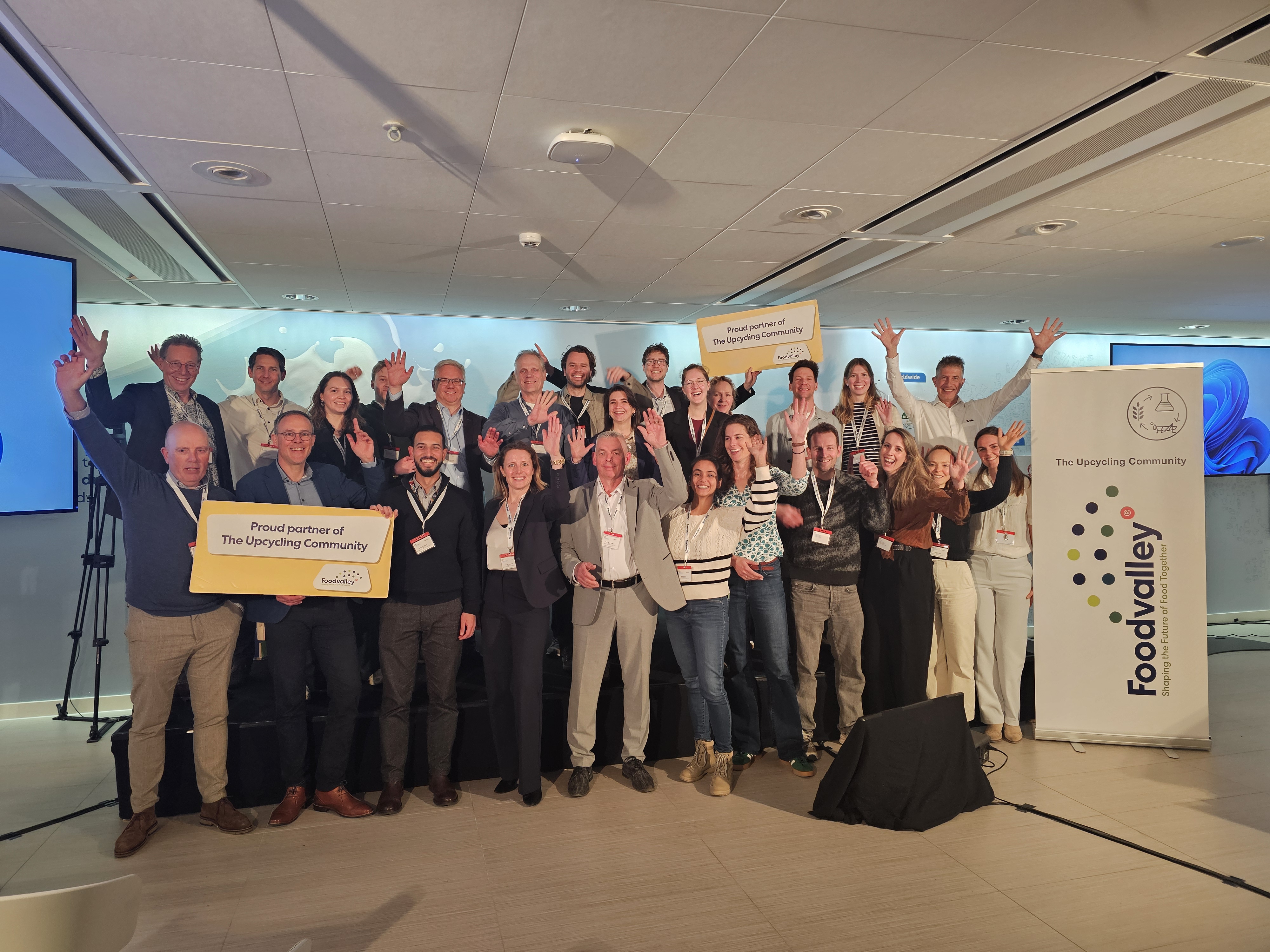
At Innovation Insights: Eating the Change 2.0, the breakout session of The Upcycling Community focused on a key question for the food industry: how do we move upcycled ingredients from promising side streams to products that can compete, and stay, in the mainstream market?
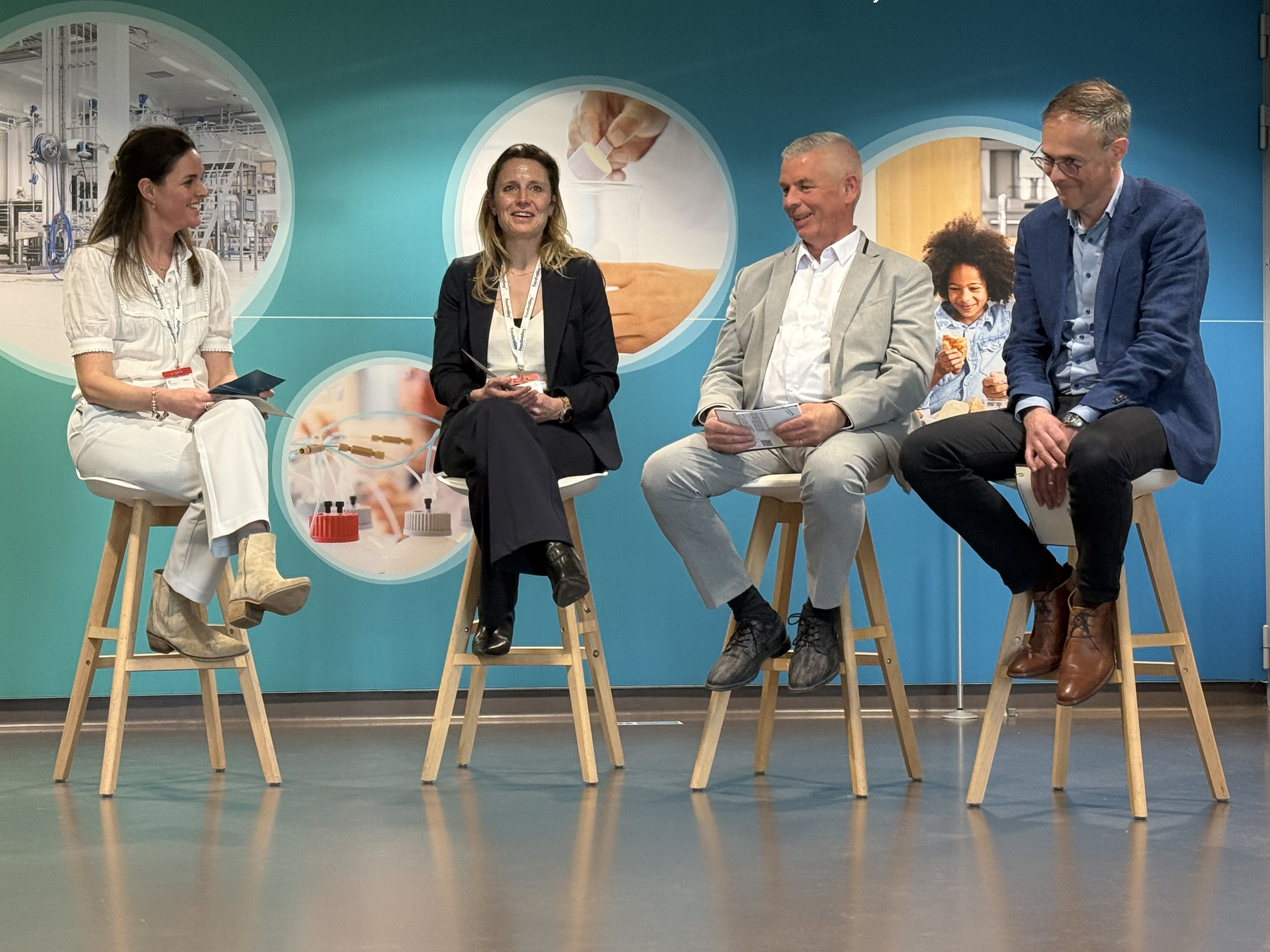
The session brought together three complementary perspectives from across the value chain: Bas Kuipers (FrieslandCampina), Derk van Manen (Duynie) and Nynke Hopmans (Royal Smilde).
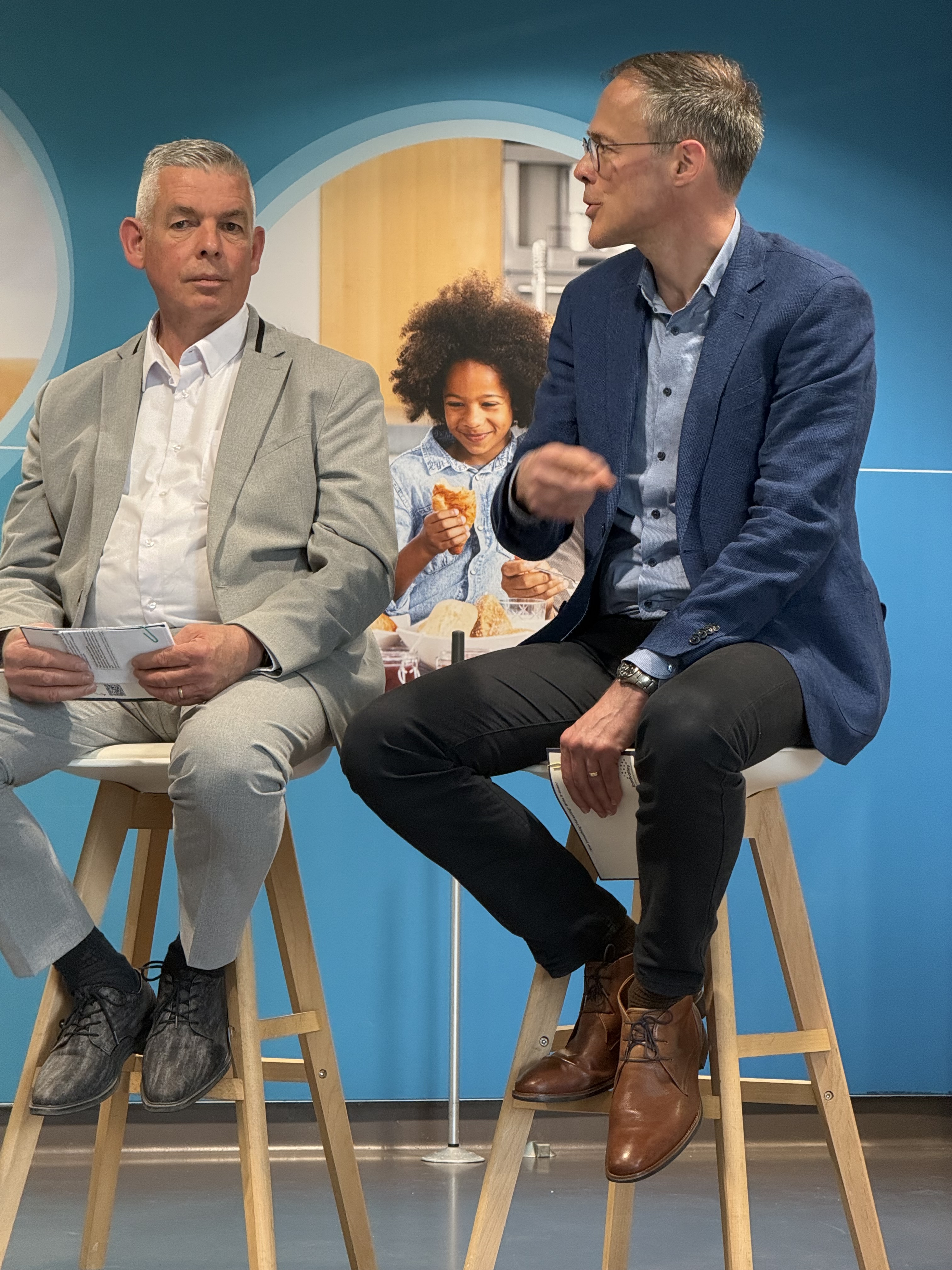
Bas Kuipers, representing FrieslandCampina, brought in a concrete challenge around dairy side streams such as whey, reflecting the perspective of a sidestream owner and supplier. Derk van Manen, from Duynie, contributed the intermediary view of a sidestream handler and ingredient producer, bridging supply and application across multiple value chains.
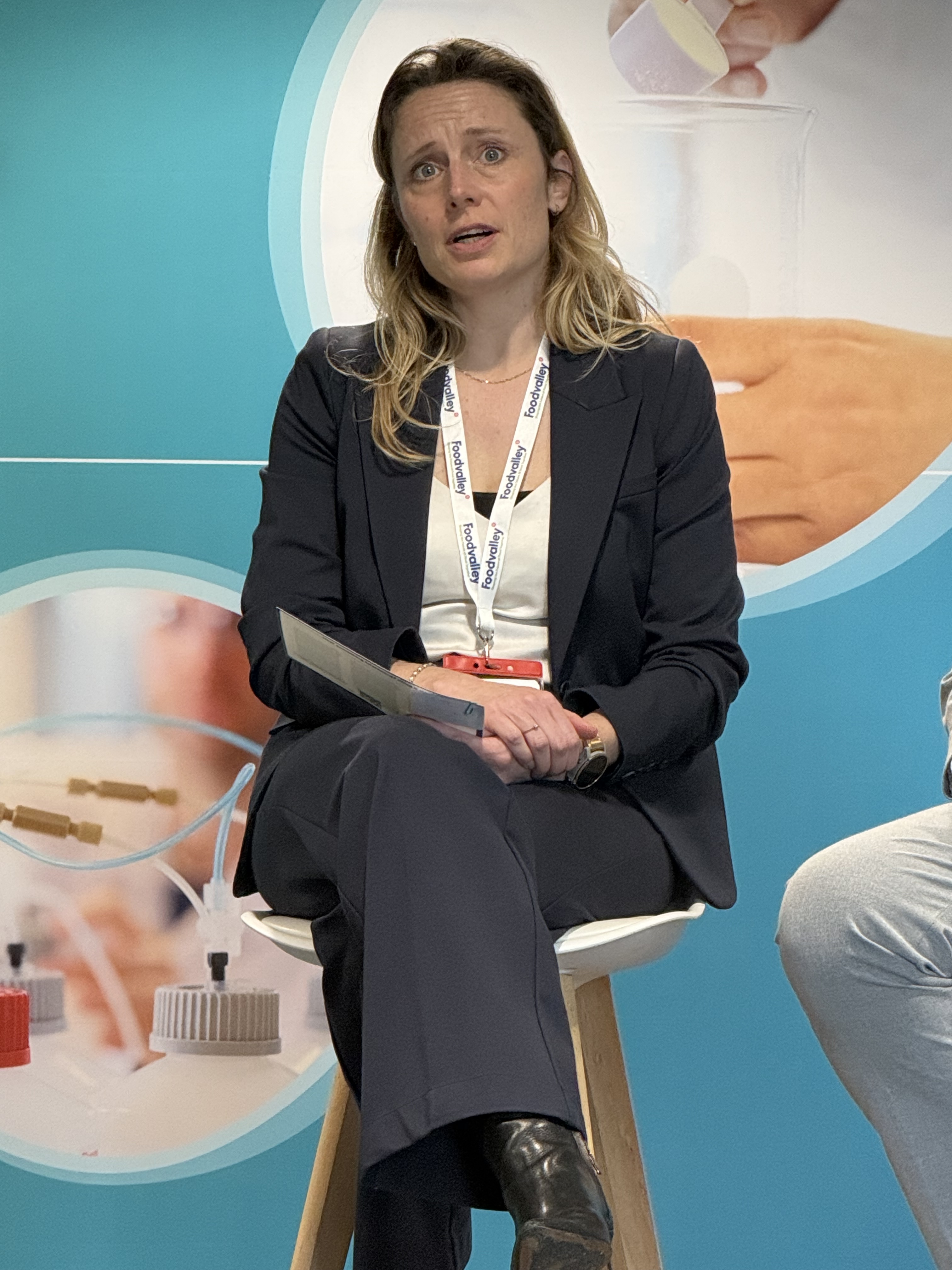
Nynke Hopmans, representing Royal Smilde, completed the chain with the perspective of a privatelabel food manufacturer, drawing on extensive experience in working directly with retail.
Together, they showed that scaling upcycled food is not a single challenge, but a chain challenge, and that real progress only happens when all parts of that chain move together.
From side stream to ingredient: more complex than it seems
For FrieslandCampina, the opportunity lies in further valorising emerging challenges related to dairy side streams, most notably the growing volumes of wet whey streams from whey processing, a market that is expanding rapidly. These streams remain complex to unlock for highervalue applications due to their composition (notably minerals and lactose), their liquid nature (making longdistance transport and further processing costly), and a challenging business case. Ideally, the stream would be valorised as completely as possible, but aligning this with the specifications of different end markets, ranging from feed and algae to insects and potentially food, remains difficult.
However, as Bas Kuipers noted, the potential is clear, especially for food applications, where value creation is highest and closest to FrieslandCampina’s core business.
During the smaller group discussions with participants from The Upcycling Community, several promising future opportunities emerged. These ranged from the development of new extraction technologies and targeted trials to test the side stream in suitable applications, to the potential role of AI as a ‘middleman’, supporting the analysis and comparison of valorisation routes for FrieslandCampina’s specific streams across multiple value‑chain perspectives. At the same time, the discussion underscored that technological options alone are not enough. As the group concluded:
“It’s not about whether it’s technically possible, but whether composition, volume, cost and logistics all align.”
Bridging the gap: infrastructure, not just innovation
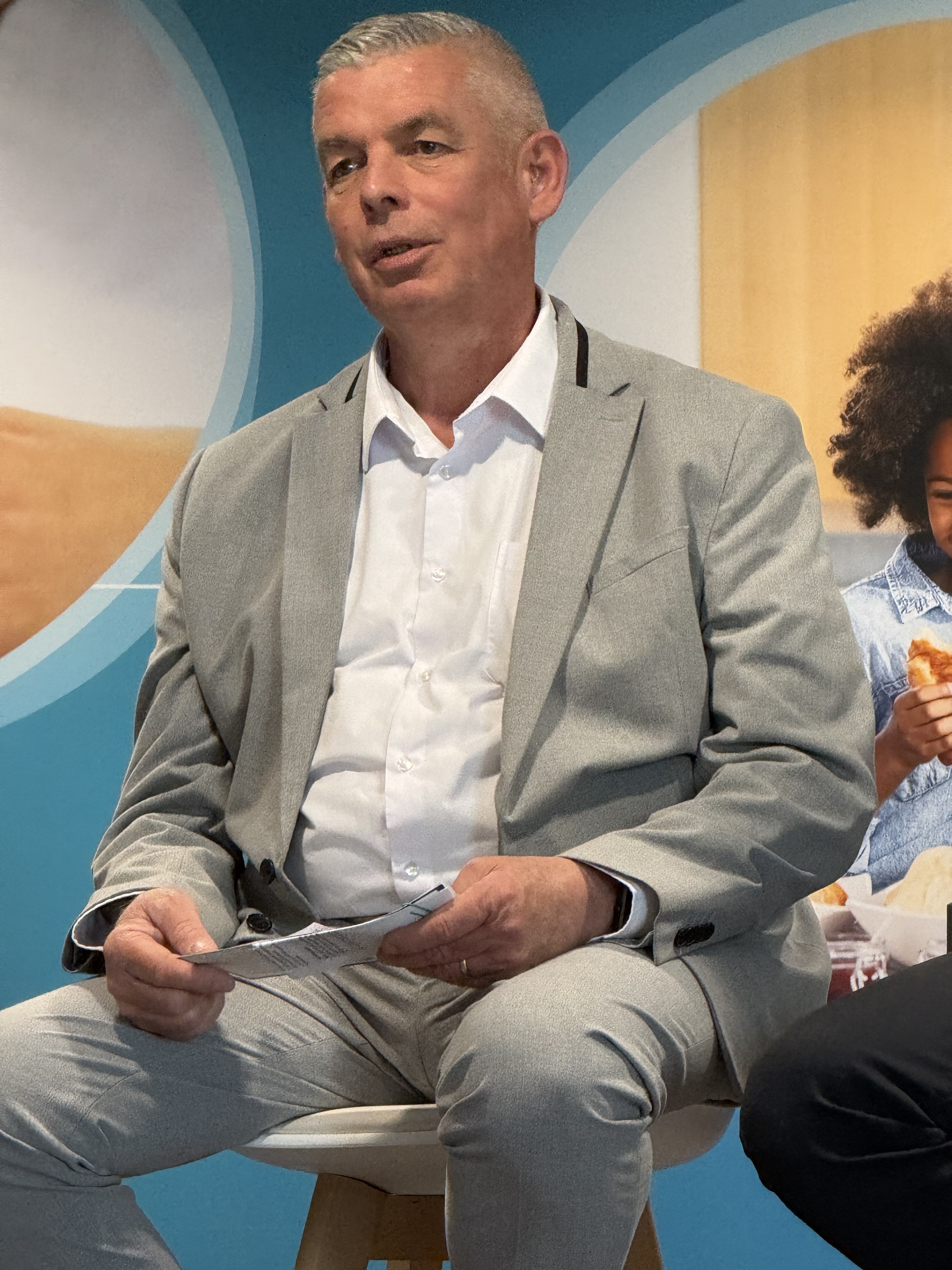
Derk van Manen (Duynie) brought a crucial perspective from the middle of the chain. With decades of experience in valorising co-products, Duynie operates at the intersection of logistics, processing, compliance and market demand.
The challenge brought in by Duynie to discuss with other partners of The Upcycling Community zoomed in on the question which food companies could benefit from codeveloping with upcycled ingredient suppliers like Duynie, and what currently stands in the way? The conversation revealed a familiar, selfreinforcing pattern across the value chain. Suppliers experience hesitation from food producers to adopt upcycled ingredients, while producers, face resistance from retailers and foodservice buyers to list products containing them. As a result, each link in the chain waits for the next to move first.
The group agreed that breaking this cycle requires frontrunners: companies and individuals willing to take the lead and potentially capture firstmover advantages. Two drivers were seen as key accelerators: CSRD reporting, which is pushing companies toward concrete sustainability targets for 2030, and growing concerns around food security and geopolitical dependency, making locally sourced side streams and upcycled ingredients not only a sustainability choice, but a strategic one. Perhaps the most important insight: the bottleneck is often not supply, but demand.
“We can produce at scale,” was the underlying message, “but we need partners who are willing to co-develop products and absorb those volumes.”
From ingredient to product: where the real test begins
That is where Nynke Hopmans (Royal Smilde) added a critical demand-side perspective. For food manufacturers, upcycled ingredients are not evaluated on sustainability alone, but on functionality, taste, consistency, price and fit with the end product.
In the collective brainstorm led by Royal Smilde, a recurring barrier quickly surfaced: “Why change a winning recipe?” Highlighting the need to show how upcycled ingredients add value where existing products fall short. Foodservice was widely seen as a more accessible entry point than retail, offering more room for experimentation, storytelling and iteration through pilots and sprints, supported by data and AIdriven feedback loops.
From a manufacturer perspective, building a strong own brand around upcycled products, rather than reformulating private labels, was discussed as a way to bypass retailer constraints, provided there is a deep understanding of the target consumer.
While clear communication of circular origins resonates with sustainabilityaware Millennials and Gen Z, success with retailers often depends on true partnership, internal alignment between CSR and category teams, and in some cases a more “silent” integration of upcycled ingredients. The key takeaway was clear: “Upcycled ingredients do not scale because they have a good story, they scale when they solve a real problem in a real product.”
The real bottleneck: creating market pull
Across all three perspectives, one theme stood out: upcycling will not scale on supply alone. Abundant side streams and advanced processing technologies are not enough if there is no strong and consistent market pull.
Scaling requires demand to be activated much earlier, by involving manufacturers and offtakers in codevelopment, and by focusing on where upcycled ingredients genuinely add value, whether through functionality, nutrition, cost efficiency or strategic supply security.
Moving forward together
The session underlined that each part of the value chain has a distinct but interdependent role to play. Side stream owners must unlock and enable new applications, ingredient partners must translate streams into scalable, foodgrade solutions, and manufacturers must turn those ingredients into products that work commercially, on the shelf, in foodservice, and for consumers. Breaking the current “waitandsee” dynamic requires frontrunners: companies and individuals willing to move first, often in partnership, and increasingly supported by regulatory pressure (such as CSRD) and growing concerns around food security and geopolitical dependency.
As the discussion showed, the opportunity is there , but making it real requires collaboration, patience and a shared focus on what works commercially.
Upcycled food goes mainstream only when the whole chain moves.
After the breakout sessions, it was time for Upcycled Drinks & Bites, giving everyone the chance to taste what upcycling looks like in practice. From hybrid sausage rolls to cocoa‑free chocolate and protein shakes made from peanut‑oil side streams, partners across The Upcycling Community showcased how upcycled ingredients can be transformed into delicious, everyday products. Curious to see what was on the menu? Read more in A taste of tomorrow: upcycled innovations at Circular Drinks & Bites.
Join the Movement
Inspired but not part of the Upcycling Community yet?
Learn more about The Upcycling Community and its ongoing initiatives. Read more and get in touch with us.